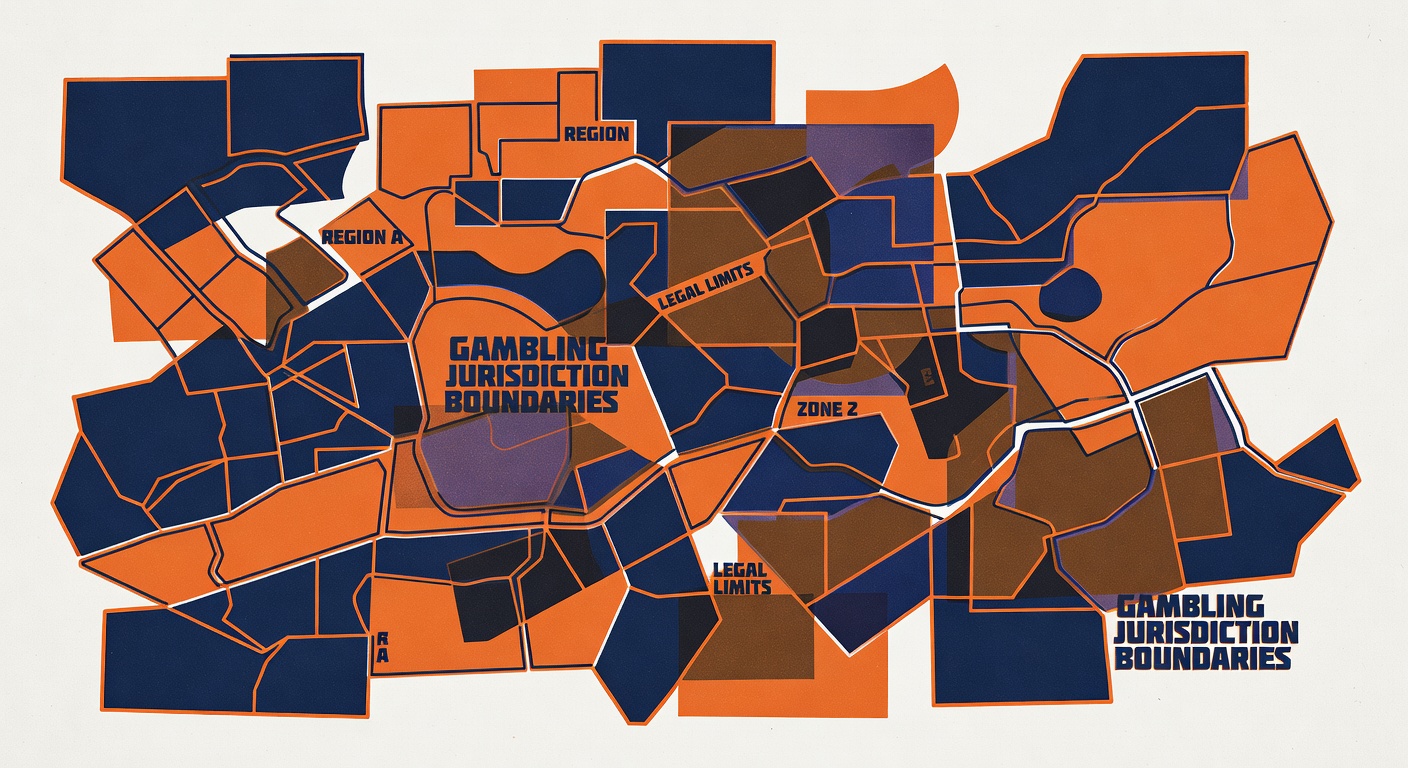
The United States has 50 state gambling regulators plus tribal gaming commissions plus the Kahnawake Gaming Commission for specific operations. Germany has 16 regional regulators (one per state). Canada has provincial gambling authorities. This is not accident. It is federalism meeting industry growth.
When gambling was marginal (1970s-1980s), federal governments didn't regulate it carefully. They let states handle it. Then gambling became profitable. Now you have historical fragmentation with modern scale. A sportsbook needs 50 licenses to operate nationwide. Each license has different requirements (KYC procedures, AML compliance, payout guarantees, responsible gambling tools).
Why Fragmentation Exists
Historically, gambling was a local moral question. States believed they had the right to decide whether to permit it. Nevada chose yes (1931). Other states chose no. This created the Las Vegas monopoly. When Atlantic City legalized (1976), New Jersey created its own regulatory framework. By the time sports betting arrived in 2018, 50 states had developed separate attitudes and requirements.
Federal preemption would have streamlined this. One national authority, one set of rules, one license for all states. But federal authority was never clearly established. The Professional and Amateur Sports Protection Act (PASPA) restricted sports betting at the federal level until 2018, but casino gaming and online slots had been regulated state-by-state for decades. Habit created path dependency. Reversing it is expensive and politically difficult.
The Operator's Problem
A casino wanting to operate in multiple states must navigate each state's requirements separately. Nevada's Gaming Control Board is strict on anti-money-laundering procedures. New Jersey's Division of Gaming Enforcement is strict on transparency. Pennsylvania's Gaming Control Board is strict on vendor licensing. These are redundant requirements often, but they're separate.
DraftKings operates in 30 states. It has 30 different regulatory relationships. Each requires separate licensing, separate compliance verification, separate reporting. A sportsbook that committed a violation in one state (say, failure to honor a responsible gambling request in Pennsylvania) could lose its license in Pennsylvania without losing licensing in other states. The company must manage this fragmentation.
The Player's Confusion
A customer sees that DraftKings operates in 30 states and assumes it's the same product everywhere. It isn't. The promotional terms are different (New Jersey allows different bonuses than Pennsylvania). The odds are sometimes different (state-mandated juice varies slightly). The responsible gambling tools are mandated by each state separately, so a tool available in one state might be unavailable in another.
This creates consumer confusion. A player moves from New Jersey to Pennsylvania and expects to find their favorite sportsbook operating identically. It won't. The interface might be the same, but the underlying rules are different.
Why It Persists
Consolidation toward federal regulation would benefit operators (lower compliance costs, single licensing process). It would confuse states (loss of tax revenue control, loss of regulatory authority). Current fragmentation allows states to extract value by imposing licensing fees and tax requirements. A state can charge DraftKings 5 million dollars for licensing and extract 25 percent of sports betting handle in taxes. Consolidating under federal authority would reduce this.
Operators lobbied for federal standardization during the online gambling boom (2010s). States lobbied against it because they benefit from fragmentation. Politicians preferred local control. The status quo prevailed.
The Evidence
Countries that unified gambling regulation (like the UK) created the UKGC (United Kingdom Gambling Commission) as a single authority for all gambling. Operators needed one license, one compliance framework, one reporting structure. The UKGC set standards that applied everywhere. Fragmentation disappeared.
Canada never unified. Provinces regulate separately. A sportsbook must be licensed in Ontario, Quebec, and British Columbia to serve all major markets. Each has different requirements. The fragmentation in Canada mirrors the US experience, and for the same reason: federalism wasn't overridden.
The Future
As gambling consolidates internationally, fragmentation becomes a competitive disadvantage. Operators prefer unified markets. Players prefer simplicity. Regulators prefer control. The tension between these preferences will likely preserve fragmentation in the US for the next decade. But international pressure toward unified frameworks (for money laundering control, player protection, and tax standardization) may force eventual consolidation.
Until then, expect regional variation. A game that's legal and regulated in Nevada might be banned in Utah. A bonus that's offered in Pennsylvania might be prohibited in Massachusetts. The patchwork exists because history created it and incentives preserve it.