The Baseline
RTP is return-to-player. It's the theoretical payout over infinite spins. A 96% RTP means that over a huge sample, the player should expect to get back 96 cents for every dollar wagered. This is correct math. It's also completely useless for a Thursday night session.
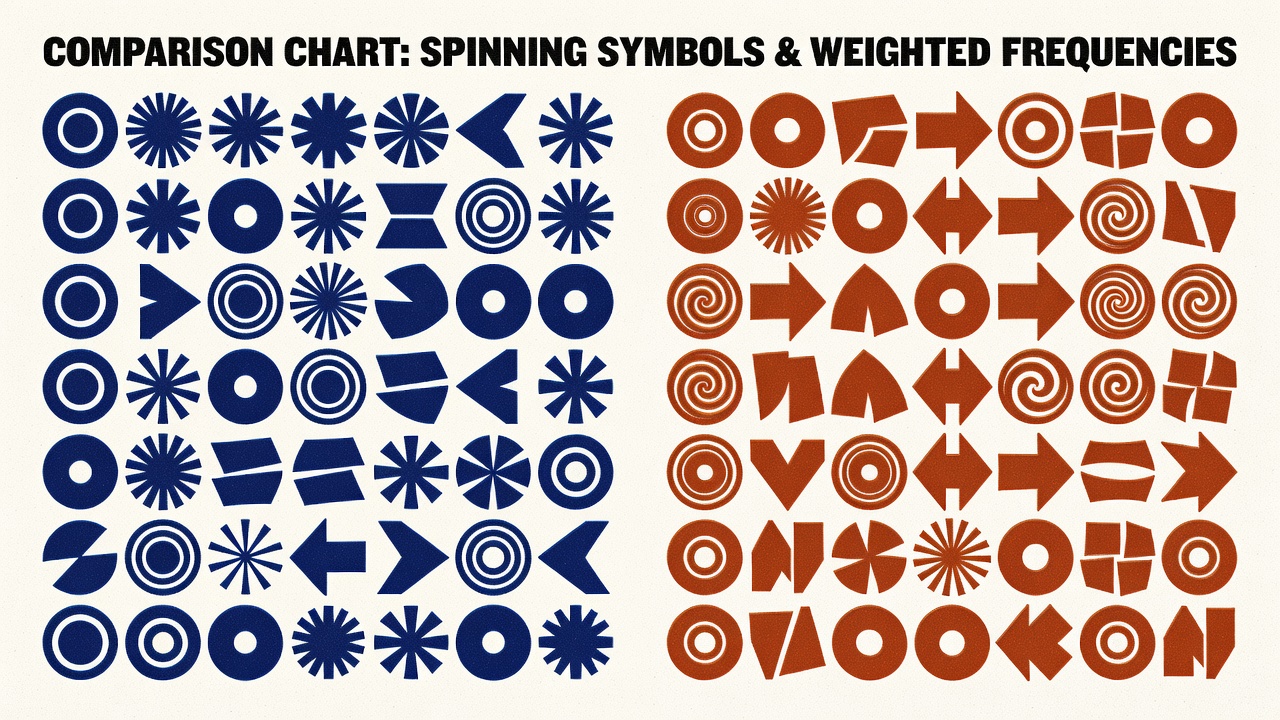
Hit frequency is how often you hit anything that pays. Some slots hit every 3 spins. Some hit every 8 spins. This determines the texture of your session. This is what actually affects whether you're running your money or your time.
The Math Nobody Mentions
Consider two hypothetical slots:
- Slot A: 96% RTP, 2% hit frequency. You spin 50 times, maybe hit twice. You lose $100 total.
- Slot B: 92% RTP, 28% hit frequency. You spin 50 times, hit maybe 14 times. You probably lose $20.
Slot B has worse RTP. But your session variance is wildly different. The chance that Slot B leaves you slightly ahead is higher. The chance that you actually enjoy the session instead of spinning nothing for 2 minutes is higher.
Regulators talk about RTP because regulators care about expected value across millions of sessions. They don't care about your Tuesday night. You should care about your Tuesday night.
Variance and the Time Horizon
Provably fair games and RNG systems produce true randomness. But true randomness isn't uniform across small samples. A slot with 96% RTP and low hit frequency can produce genuinely painful variance. You can lose your whole buy-in without hitting a single thing worth $3+.
A slot with slightly lower RTP and higher hit frequency produces a completely different experience. You're getting constant feedback. Your money is staying alive longer because you're getting paid more often, even if the payouts are smaller.
This is why casinos position low-hit-frequency games in premium spots. They can advertise the 97% RTP. What they don't advertise is that it takes 2,000 spins to see it, and most players leave after 50.
Session Play vs Grind
If you're doing an 8-hour session, RTP matters more. You're spinning enough times that the variance evens out and the theoretical payout approaches reality.
If you're doing 20 minutes, hit frequency matters more. You want to feel like you're playing, not like you're feeding money into a machine that says no.
The mixup is that casinos market high-RTP games to weekend players. Weekend players do 30-minute sessions. They should be playing high hit-frequency games with lower RTP. They'd probably leave happier and with less damage.
The Mechanics
Slots with high hit frequency usually hit small. You spin $1, hit $1.25. You spin $1, hit $0.75. The compensation is that the big hits are rarer. The low-frequency slots hit big less often but when they hit, it's meaningful.
From a pure math standpoint, the RTP accounts for all of this. But from an actual-person-actually-playing standpoint, the RTP is irrelevant to what happens in the next 20 minutes.
Choose your game based on your time horizon and your tolerance for losing without feedback. If you can't stand spinning nothing, high hit frequency matters more than RTP. If you're in for hours and you want to optimize, study the RTP. Your time at the table should match the machine's actual design.