The Scenario
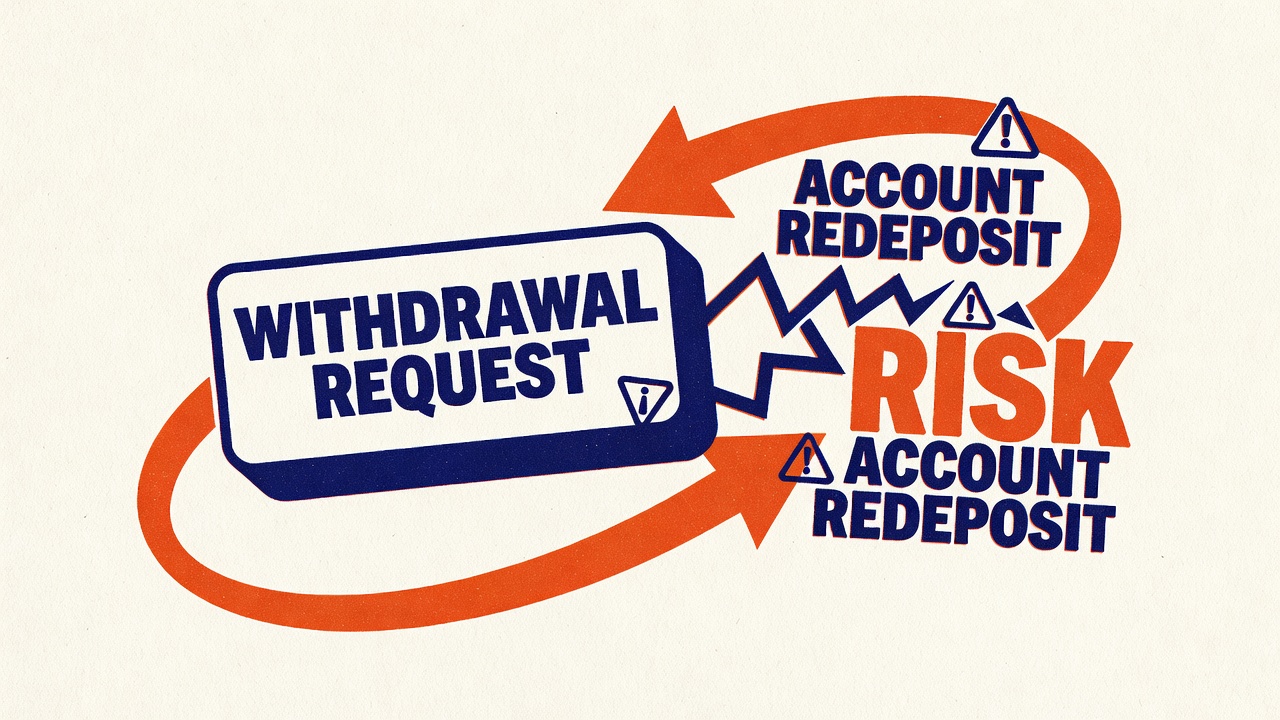
You've been playing at a casino for two hours. You're up $400. You hit the withdrawal button, request $400 out. You sit with it pending for 15 minutes. The itch hits. You want to play more. You have a feeling about the next hand.
You call the casino. You say: cancel that withdrawal, put it back. They do. You now have $400 in the account again. You play.
Two hours later, you're down $800 total. That reverse withdrawal just cost you the entire win plus an additional loss.
Why Casinos Allow It
Casinos allow reverse withdrawals because they're good business. Every reverse withdrawal is money that was leaving that gets gambled instead. This is free money to the house.
The process is simple: your withdrawal is typically in a pending state for 24-72 hours. During that time, before it actually hits the payment processor, you can request it be reversed. The casino credits your account immediately.
From the casino's perspective, this is perfect. They get the money back, you lose more money, and the player feels like they had a choice. They feel like they could have left but chose to stay and gamble. This is psychologically valuable because it's less tilting than just losing the money outright.
The Real Cost
The real cost of a reverse withdrawal is not the loss it creates. The real cost is that it breaks the stopping decision. You had made a rational choice: I'm up, I'm going to withdraw. Your brain accepted this. Your emotions accepted this. The game was over.
A reverse withdrawal restarts the game. You're back in. The emotional reset that withdrawal gave you is gone. You're playing again with the same adrenaline, the same hope, the same inability to stop, because you've now played for 30 minutes without a reset.
Professional players never reverse withdrawals. The discipline is: once you've decided to withdraw, you withdraw. The psychological advantage of having made the exit decision is worth more than any single hand.
The House Edge
Every reverse withdrawal adds, on average, 5-20 percent to the house edge on the money you put back. You're playing with the emotional state of someone who was already planning to lose, and you're extending that state.
The casino loves this. They make more money from people who reverse withdrawals than from people who just gamble continuously because the reversal destroys the last remaining discipline mechanism.
The Play
I watched a whale in 2003 reverse a $500,000 withdrawal. He was up for the night. He was leaving. He changed his mind. He lost $1.3 million over the next four hours. The casino comped his suite for a year. He never came back.
He thought he was playing smart, gambling on a "feel." He was actually resetting his emotional exit and extending his losing streak. The reverse withdrawal was the pivot point.
The Prevention
If you're the kind of player who might reverse withdrawals, you have to make a rule: no reversal under any circumstances. The money in withdrawal is psychologically gone. Treat it that way. Don't call the casino asking for it back. The temptation to do so is a sign that you're not actually ready to stop, and reversing is just extending the inevitable loss.