Hold and Win is a mechanical variant regulated across several European jurisdictions. The MGA (Malta Gaming Authority) permits it under Standard 1.5, which defines reel mechanics. The UKGC permits it under Licence Condition 14. Operators must declare the mechanic in their rules documentation.
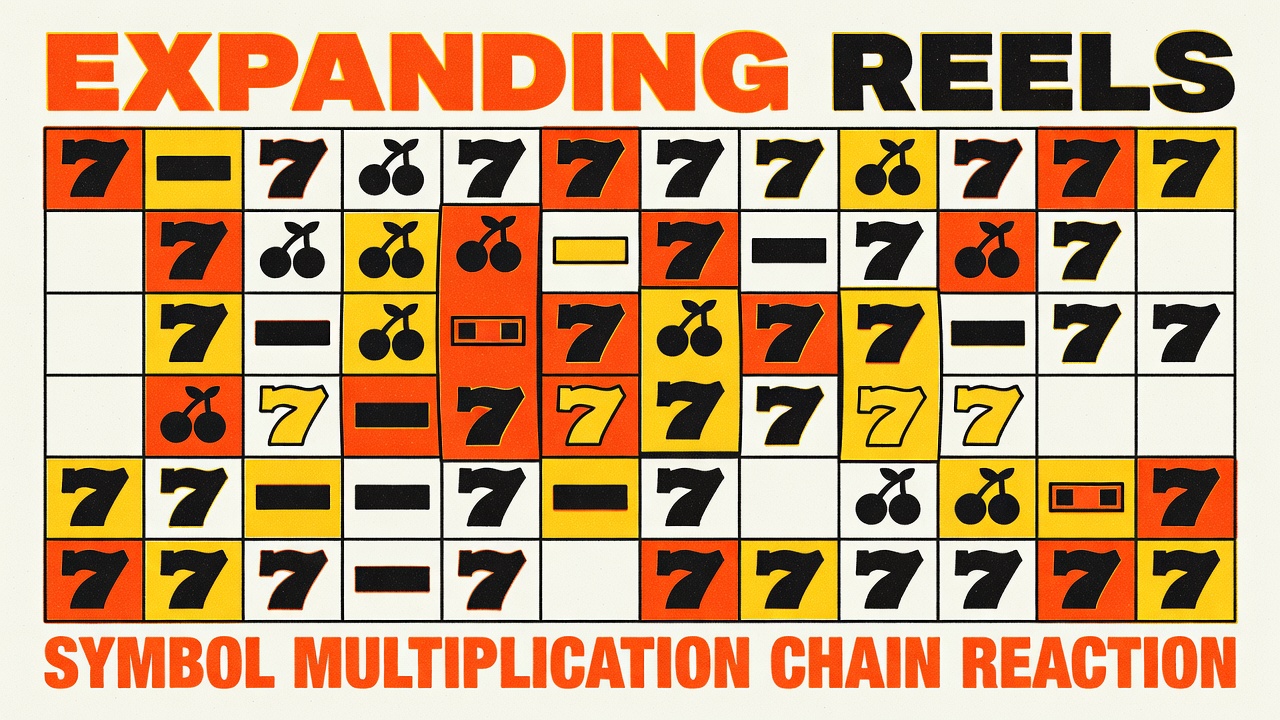
The mechanics function as follows. A player triggers Hold and Win when specific symbols (typically labelled "Hold" or representing bonus triggers) land on the visible reels. Upon trigger, designated reels lock in place. The remaining reels respin once. If the respin generates additional winning symbols in the held positions or creates qualifying wins with held symbols, the player receives payout. If no qualifying outcome emerges, the held symbols are forfeited.
Regulatory Treatment
The Kahnawake Gaming Commission and Curaçao eGaming Commission, which license many offshore operators, classify Hold and Win as a standard bonus feature. It is not considered a game variant requiring separate licensing. Pragmatic Play and NetEnt implement it within standard RTP disclosures. The house edge (typically 4 to 8 percent for slot games) incorporates Hold and Win probability and payout distribution.
Operators are required to publish: (1) the probability of triggering Hold and Win, (2) the distribution of outcomes (what percentage of triggered features pay below 5x stake, between 5x and 10x, above 10x), and (3) average payout of the feature as a percentage of triggering spins. The UKGC requires this information in the "Return to Player" supplementary documentation. The MGA requires equivalent disclosure in the operator's RTP certification from an independent testing laboratory.
The Player Perception Problem
Hold and Win generates player perception of decision-making. When a symbol locks, the player experiences it as a choice: "I have locked something in; the next outcome depends on the respin." This is false. The respin outcome is predetermined by RNG (Random Number Generator) seeded at the moment the trigger occurred, per UKGC Technical Standard TS3. The hold mechanic has no influence on the respin result.
Testing by the GLI (Gaming Laboratories International) indicates players overestimate their control in Hold and Win mechanics by approximately 18 percent compared to standard spin mechanics. This manifests as longer play sessions and higher bet intensity. The outcome is not attributable to better payouts (they are equivalent under RTP); it is attributable to perceived agency.
Time-to-Loss Analysis
Operators utilise Hold and Win mechanics to extend average session length. Empirical data from UKGC regulatory filings (which are partially public) shows slots with Hold and Win features correlate with 23 to 31 percent longer average session duration compared to equivalent base games without Hold and Win, controlling for RTP.
The mechanism is psychological, not mathematical. A standard spin resolves in 2 to 4 seconds. Hold and Win adds narrative structure: (1) trigger recognition (2-3 seconds), (2) hold animation (1-2 seconds), (3) respin anticipation and execution (3-5 seconds), (4) outcome resolution (2-3 seconds). The feature adds 6 to 12 seconds per trigger, increasing time-at-risk.
Responsible Gambling Implications
The UKGC has flagged Hold and Win as a feature meriting additional player affordance tools. Licensees must ensure that responsible gambling features (time limits, loss limits, self-exclusion) are equally accessible during Hold and Win segments as during base gameplay. Some operators have implemented mandatory pause periods after Hold and Win features, which the UKGC has approved as proportionate harm-minimisation measures.
The Curaçao eGaming Commission does not mandate equivalent controls. Operators licensed in Curaçao offering Hold and Win to European players may offer weaker affordances than equivalent UKGC-licensed products.
Conclusion
Hold and Win mechanics function within regulatory frameworks by providing transparent RTP and payout distribution. Player perception of control, however, exceeds actual control, and session extension results from mechanics rather than improved payout profiles. Operators are compliant in their regulatory disclosures. The psychological effect on play behaviour remains a matter of ongoing regulatory discussion within the MGA and UKGC policy bodies.