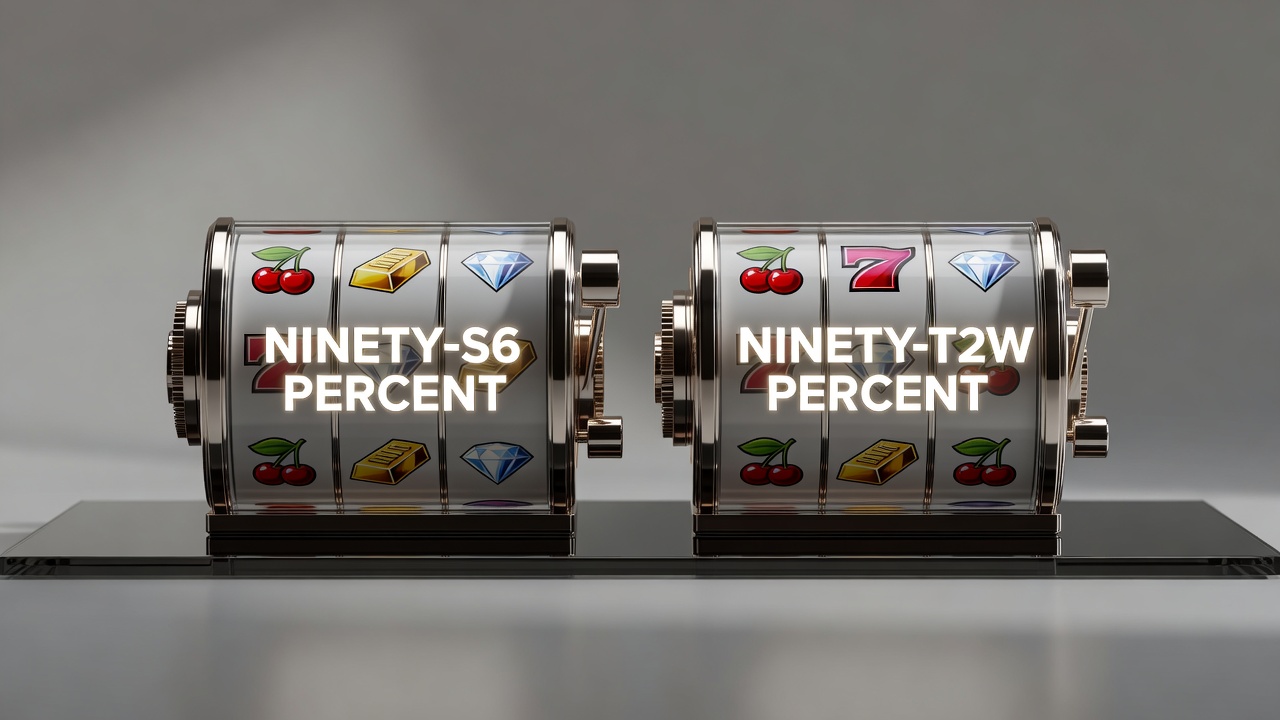
Casinos publish RTP percentages for all their games, usually somewhere in the fine print or on a details page. Slots from Pragmatic Play typically advertise 96 percent RTP. Blackjack typically advertises 99.5 percent RTP. Roulette advertises 97.3 percent RTP (European wheel with one zero). The number looks precise. The number is also deceptive when applied to table games.
RTP is defined as follows: over a sufficiently large number of hands, the percentage of wagered mone
RTP is defined as follows: over a sufficiently large number of hands, the percentage of wagered money that is returned to players as winnings. If 100,000 dollars is wagered on a game with 96 percent RTP, the mathematical expectation is that 96,000 dollars is returned to players and 4,000 dollars is retained by the house. This is theory. It is mathematically sound. It is also nearly impossible to test at the table level.
The reason is play style. An RTP number assumes a baseline play style. For blackjack, it assumes the player is using basic strategy (the mathematically correct play for every hand). For roulette, it assumes the player is placing bets with even odds (red, black, even, odd, high, low). If the player deviates from this baseline, the RTP changes.
A blackjack player who always hits on 17 (a terrible decision) will face a house edge much higher than 0.5 percent. A roulette player who bets on individual numbers (35-to-1 payout on 1-in-37 odds) faces a house edge of 2.7 percent, not the 2.7 percent the game advertises (which assumes equal-odds bets). The RTP is contextual.
For table games specifically, this matters because dealers cannot change the game. A slot machine can be configured to hit winners frequently at low payouts or rarely at high payouts, both at 96 percent RTP. A table game is a fixed set of rules. The blackjack table has one set of rules. The RTP is determined by those rules and the player's play. If the player plays perfectly, the RTP approaches 99.5 percent. If the player plays badly, the RTP plummets.
Methodology: to test a table game's RTP claim, I would need to play thousands of hands under controlled conditions (always hitting on the same card totals, always playing the same strategy, always making the same bets). This would cost me thousands of dollars. It is not practical. Professional gaming labs do this. They publish their results. A certified RTP of 99.5 percent for blackjack means: if a player plays basic strategy perfectly, and plays thousands of hands, the results will approach 99.5 percent.
The practical implication: RTP is most useful when comparing games with the same rules. Spanish 21 vs regular blackjack, for example. The RTP difference tells you which is mathematically better for an optimal player. RTP is least useful when comparing different games or comparing games to a player's actual experience. Your blackjack experience will look very different from 99.5 percent RTP if you do not play basic strategy.
Do not use RTP to estimate your winnings or losses. Use RTP to understand the baseline math. Then account for your own play and decision quality. A player making bad decisions will lose significantly more than the RTP suggests.