The card comes. You have King-Ace. Blackjack. At the high-limit baccarat table where I work, this is a moment of elegance. You have the best possible opening hand. The dealer turns over a 10-value card. The hand is decided. You have won without needing another card.
The payout depends on the casino
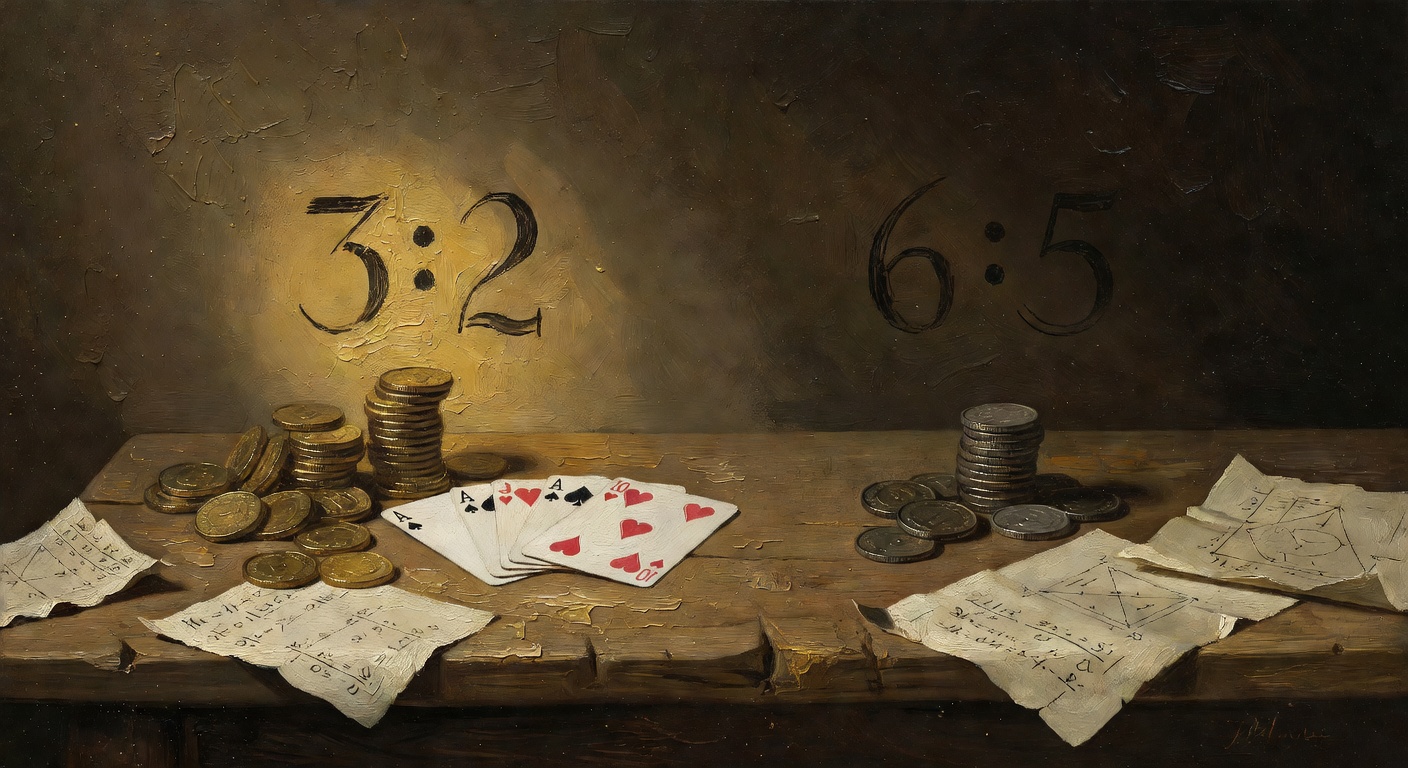
The payout depends on the casino. Most proper blackjack tables pay 3 to 2. You bet 100 dollars, your blackjack wins 150 dollars. You keep your original bet, you gain 150. You leave the hand with 250 dollars.
At some casinos, particularly the lower-tier properties, blackjack pays 6 to 5. You bet 100 dollars, your blackjack wins 120 dollars. You leave the hand with 220 dollars.
The difference is 30 dollars on a 100 dollar blackjack. Per blackjack. A player who plays blackjack recreationally might get one or two blackjacks per session. If they play once a week for fifty weeks a year, that is 100 blackjacks. The difference is 3000 dollars per year.
Over a lifetime, a regular blackjack player will see hundreds or thousands of blackjacks. At 3 to 2, they get full value. At 6 to 5, they are short 20 percent of the payout. The house is essentially taking a commission on the player's best hand.
The casino knows this. The 6 to 5 payout exists to reduce the house's theoretical loss while making the game appear identical to the player at first glance. The difference is not visible until you calculate it across a large number of hands. By then, the player has already lost the money.
Why would a casino do this? Because low-limit players do not know the difference. They see blackjack on a sign and assume the payout is the same everywhere. They do not compare. The casino benefits by the difference every single time someone hits blackjack at a 6 to 5 table instead of a 3 to 2 table.
The rule of play is simple: never play blackjack at a table that pays less than 3 to 2 on blackjack. A 6 to 5 payout is mathematically worse. The house edge increases from about 0.5 percent to closer to 1.5 percent. You are playing a harder game for the same amount of enjoyment.
If a casino offers 6 to 5 blackjack, it is a signal that they have decided to prioritize short-term extraction over player loyalty. They will win more money in the short run from players who do not notice the worse payout. They will lose players over the long run who realize they are getting a bad deal.
I have worked tables on both sides. The 3 to 2 tables feel fair. The 6 to 5 tables feel like the casino is taking every edge it can. The players can tell, even if they cannot articulate exactly what they are feeling. The casino that offers fair blackjack gets repeat customers. The casino that cuts the payout gets one-time visitors.
The difference between 3 to 2 and 6 to 5 is the difference between a fair game and a game that the house has decided to squeeze. The casino will never emphasize this difference. The player has to notice.