The Answer
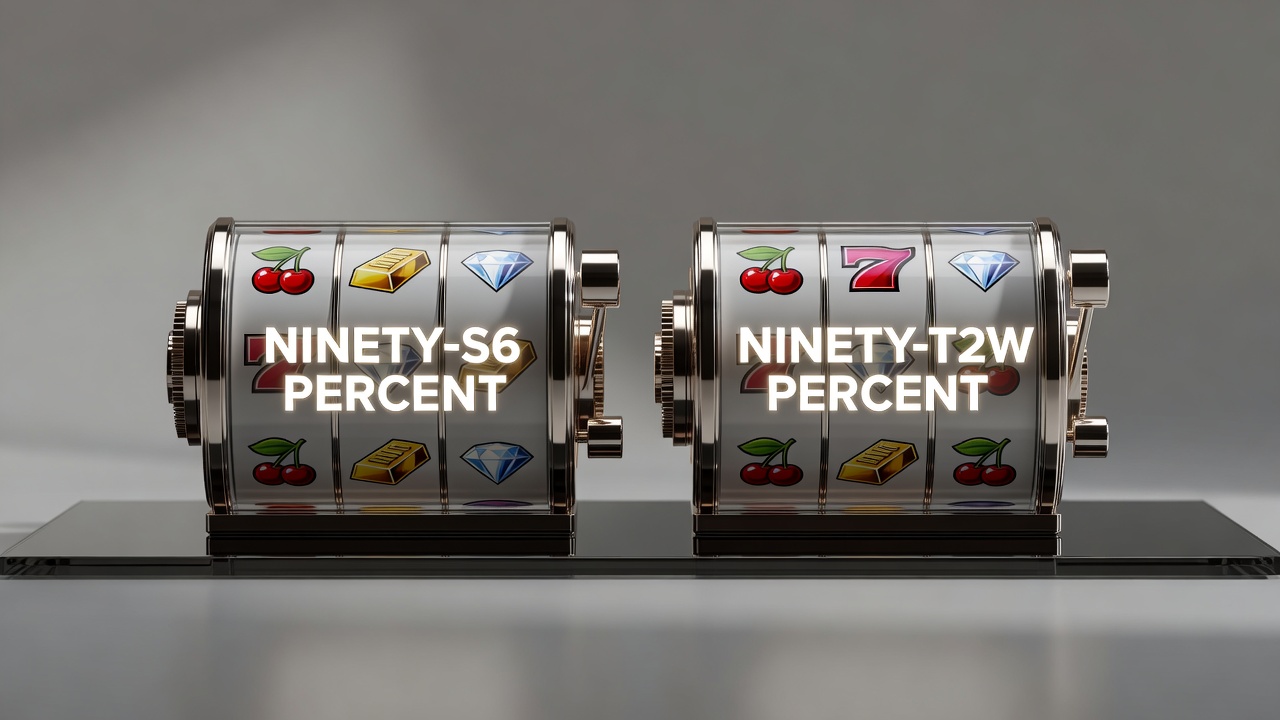
RTP stands for Return To Player. A 96% RTP slot pays back 96 cents per dollar wagered, over infinite play. A 92% slot pays back 92 cents. The four-point spread is pure math, baked into the firmware before the cabinet ever hits the floor.
I've opened the guts of Aristocrats, Bally machines, IGT's Gold Series cabinets from the 1990s through last month. The mechanism is always the same: the software engineer who wrote the reel weight table didn't put equal probability on every symbol. High-value symbols are weighted lower. Low-value symbols more frequent. The result is not random; it's statistically guaranteed over time.
Let me walk you through a simplified example. A three-reel machine has 22 stops per reel. If every stop held a cherry, then every combination would be equally likely. But that's not the case. The manufacturer might place 12 cherries on the reel, 5 bars, 3 sevens, and 2 jackpot symbols. Now cherries land more often than sevens. The math compounds across three reels, and when you calculate the payout table against the weighted reel strips, you get your RTP.
Why Manufacturers Choose Different RTP Levels
A casino operator can request multiple ROM versions of the same cabinet. Aristocrat's Diamond-series machines come in 87%, 90%, 92%, 94%, and 96% versions. The operator buys what fits their floor strategy. High-traffic games in front might run 96% to keep players longer. Back rooms get 87%. It's inventory optimization.
The difference accumulates. On a $2 bet over 10,000 spins at 92% RTP, the house expects to keep $800. At 96%, they keep $400. Operators know their average session length. They know hold per device. A 92% machine on a slow shift might hold less money overall than a 96% machine because players get frustrated and leave faster.
The Technology Haven't Changed
I worked on Big Seven machines in 1987. The RTP was 92%. I opened a Wizard of Oz cabinet in 2004. 96%. I read the architecture documents for Pragmatic Play's RTP-adjustable engine last year. Same principle: weighted reel strips, defined payout frequencies, math that produces a known house edge.
When you hear about a machine being "loose," what's actually happening is that the operator has loaded a high-RTP version of that game. When you chase a machine that's been "tight," you're fighting firmware that was literally designed to hold more. The machine isn't getting tired. The math didn't change between yesterday and today.
Modern online casinos can adjust RTP by configuration, sometimes mid-session, though reputable operators don't. The point is: it's all software. A Pragmatic Play roulette game in Curacao might run at 96% RTP while the same game in a Dutch online casino runs at 91%, both because of regulatory appetite and operator preference.
Why 92% and 96% Matter
Because 4% compounds. Play $10,000 through a 92% RTP machine. Expect to lose $800. Play $10,000 through 96%. Expect to lose $400. Over a season, a player spending $2000 a month sees the difference in their account balance.
Casinos publish RTP because regulation requires it. You'll find it in the help menu or on the cabinet. Smart players check before sitting down. Most don't. They assume all slots are the same, when in fact the firmware is doing different work.
The RTP is not a guarantee on any single session. It's a statistical truth over millions of spins, binding the house to math that runs deeper than luck.