Phil Ivey is the LeBron James of poker, except he started earlier and stayed longer. Let me run you through the full playbook on how he became poker's Tiger Woods.
Ten bracelets. One World Poker Tour title. Over forty million dollars in live tournament earnings. And that is just the TV money. The real numbers, the cash game numbers, are bigger than anyone will officially confirm.
Here are the ten plays that define the Ivey career.
1. The fake ID era (1995-1998)
This is where the legend starts. Phillip Dennis Ivey grows up in Roselle, New Jersey. He is playing poker at the Taj Mahal in Atlantic City at age sixteen. Which is illegal. He has a fake ID under the name Jerome. The regulars call him No Home Jerome because he never seems to leave the card room. This is like watching a young Kobe sneak into a pro gym at night. You can already see the game speed.
By the time he is old enough to legally be at the tables, he has been playing fifteen hundred hours a year for two years. That is the hidden head start. Nobody knew his real name and he was already one of the sharpest $5/10 and $10/20 players on the East Coast.
2. The first bracelet (2000)
World Series of Poker, Pot Limit Omaha, he is 23 years old. He beats Amarillo Slim heads up. Slim is one of the old-guard legends. Ivey does not speak to him during the heads-up match. Just stares. Plays pots. Takes chips.
Think of this as the kid version of Tiger winning the 1997 Masters by 12 shots. It is the moment the sport noticed that a generational talent had arrived.
3. The Monte Carlo 2005 (The Full Court Press)
Monte Carlo Millions, 2005. Ivey wins over a million dollars in a field of hundreds of the world's best. What stands out is not the win. What stands out is the image. Ivey in a Nets jersey at a Monaco cash game, chip-stacking like the chips are a rosary, with Patrik Antonius and Phil Hellmuth on either side. This is the era when Ivey becomes a fixture at the biggest cash games on the planet.
4. Full Tilt (2006-2011, The Neutral Zone)
Ivey becomes the face of Full Tilt Poker. Equity holder. Flagship pro. Online nosebleeds. He is playing Tom Dwan and Di Dang (Urindanger) at stakes that most pros have not seen in their lives.
Black Friday hits in April 2011. Full Tilt goes down in flames. There are lawsuits. Ivey files suit against Full Tilt for damages to his reputation and for owed player funds. He eventually gets paid. Many of his opponents do not, or at least not for years. My take: this is the chapter that most fans skip over, but it is where Ivey demonstrated something important, which is that he knew his own weight. He was not just a grinder. He was a brand.
5. The 2009 WSOP Main Event final table
He finishes seventh. Most coverage focuses on the winner, which is Joe Cada. But the story of that final table is Ivey. He enters with a short stack, runs pure cards for a day, and briefly has the chip lead. The moment he bubbles out, the TV crew cuts to him for what feels like ten minutes of silent reaction. My prediction at the time: we would see him back at a main event final table within a decade. I was right about the quality of the player, wrong about the schedule. He has come close but has not been back at a main event final since.
6. The Macau cash games (2012-2014)
The big private cash games move to Macau during this era. Ivey is there. The stakes are reported in the press as one of the largest the modern game has ever seen. Buy-ins in the millions. Players include Paul Phua, Tom Dwan, and various unnamed Asian businessmen. Ivey reportedly loses heavily at times and wins heavily at others. The overall result is disputed and will probably never be publicly audited.
What is not disputed is that Ivey demonstrated an appetite for the highest possible stakes against the best available opposition. That is Tiger Woods at the US Open. That is LeBron in the Finals. You go where the competition is, and you play.
7. The edge-sorting controversy (2012-2014, The Pinch Hit That Went Wrong)
This is the chapter that divides fans. Ivey and a partner named Cheung Yin Sun use a technique called edge sorting to win at Punto Banco baccarat at Crockfords in London and at Borgata in Atlantic City. Seven point eight million pounds at Crockfords. About ten million dollars at Borgata.
The casinos refuse to pay Crockfords and later claw back Borgata. The cases go to court. Ivey loses both, eventually. The courts rule that edge sorting constitutes cheating within the meaning of the relevant gambling acts, even though Ivey did not touch the cards himself.
My take, because you came here for takes: this episode does not diminish Ivey as a poker player. It does complicate the Tiger Woods comparison, which depends on the sport being played straight. Ivey found an edge. The edge was legally disputed. The courts sided with the casinos. This is the stuff of an asterisk, depending on how you feel about asterisks.
8. The tenth bracelet (2014)
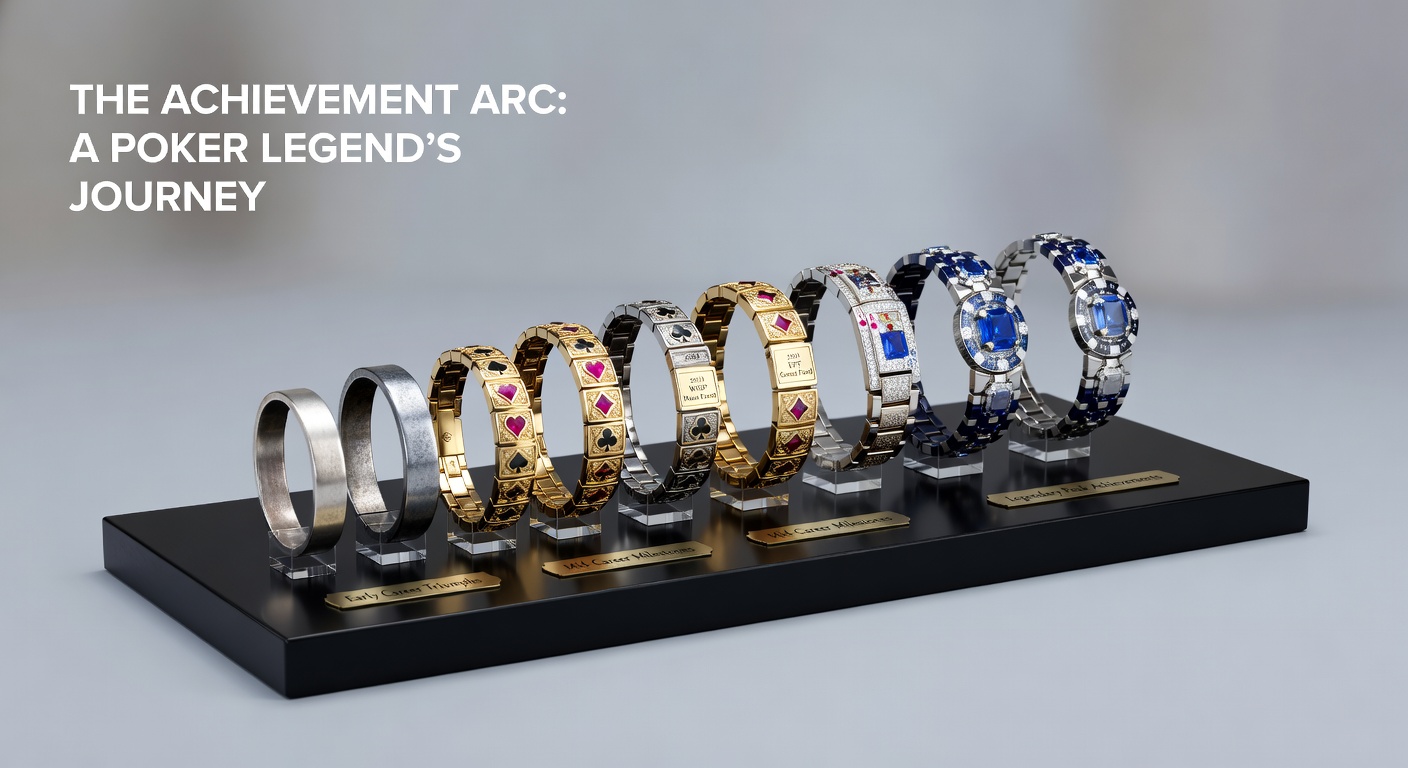
Phil Ivey wins his ninth bracelet in 2013 and his tenth in 2014 in the 2014 WSOP Eight Game Mix. Ten bracelets. Only Phil Hellmuth, Doyle Brunson, and Johnny Chan have matched or exceeded it in the modern era, and Hellmuth's count is concentrated in Hold'em events while Ivey's are spread across many different games.
This is the range. This is what makes Ivey the most complete tournament player of his generation. He can win a no-limit event. He can win a Stud-8 event. He can win a pot-limit Omaha event. The comparison is less Tiger Woods and more a decathlete who is also the best marathoner in the field.
9. The unretirement era (2017-present, The Two-Minute Drill)
Ivey publicly steps back from the WSOP for a few years. Then he shows up again. He plays in the 2019 and 2020 events, quieter, fewer media appearances. He has been seen at Triton Poker Series events in London and the Bahamas, where the stakes suit his preference for smaller, higher-roller fields.
He has been playing the Triton Super High Roller series consistently. At the time of writing, he has final-tabled multiple events there and cashed for eight figures in the high-roller circuit over the last five years. He is in his late forties now. The game is full of twenty-five-year-olds with solver training and online experience. And he is still winning money from them.
That is the neutral-zone trap. Ivey draws the young guns in by playing hands that look weak on paper and then exploits their assumptions with levels of table feel they have not yet developed.
10. The legacy question
Here is my prediction. Ivey will be remembered, in twenty years, as the best live player of his generation, with a qualification. The qualification is the edge-sorting chapter, which will sit on his Wikipedia page for as long as Wikipedia exists. Every profile written about him for the rest of his life will include it. That is the cost of the choice he made.
But the poker legacy is untouched by the baccarat chapter, because they are different games. At the poker table, Ivey's record is what it is: ten bracelets, tens of millions in tournament cashes, an untracked but enormous cash-game profile, and a style of play that influenced a decade of pros who came up watching him.
If you were drafting a Mount Rushmore of modern poker players, you take Ivey first, second, or third depending on how you weight tournaments against cash. You do not leave him off. Nobody has, and nobody will.