The Definition
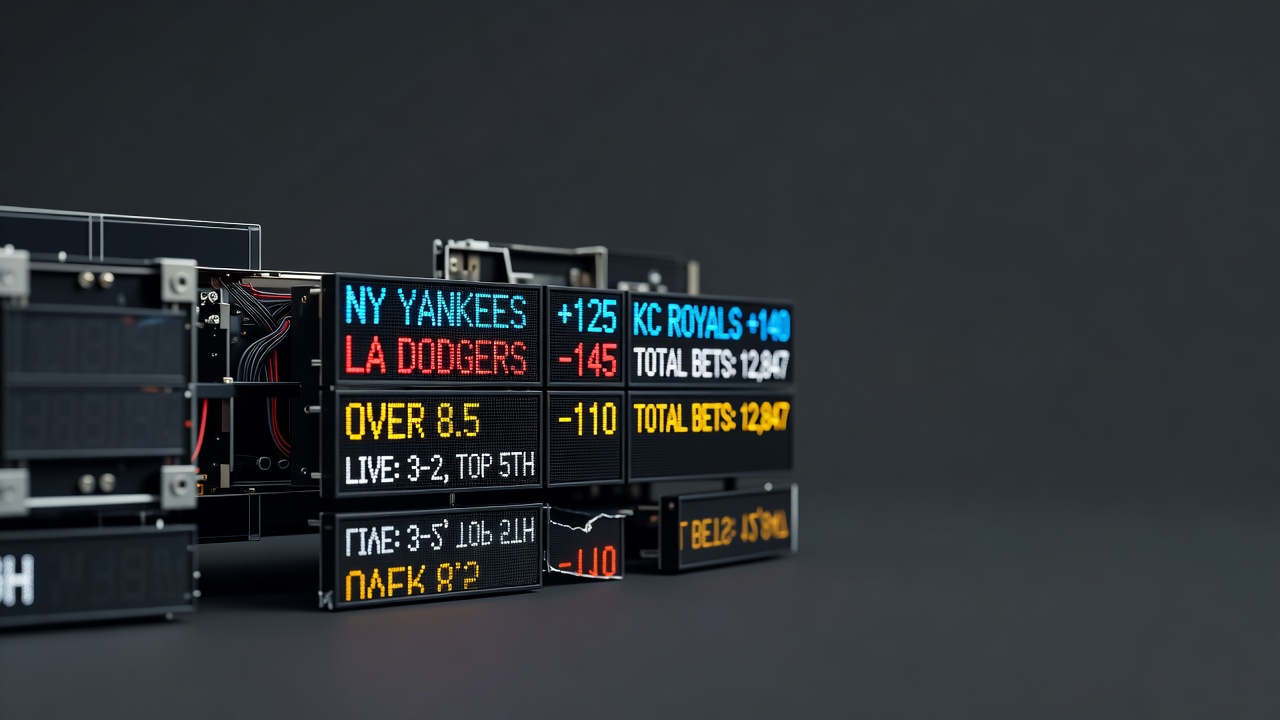
Micro-markets are wagering options on granular events within a game. Instead of betting the moneyline or the spread, you wager on the next pitch, the next play, the next point. Baseball micro-markets include run-line spreads on individual innings. Basketball markets cover point spreads for single quarters. Soccer offers markets on corners, throw-ins, goals by specific players in specific minutes.
The explosion of micro-markets correlates with the rise of live betting infrastructure. Twenty years ago, micro-markets were practically impossible. Sportsbooks needed minutes to adjust odds. Now, with automated systems, odds update in seconds. A batter steps to the plate with runners on second and third, two outs, down one run. A sportsbook updates the live over-under on that batter's plate appearance. Bettors can wager on whether he draws a walk or strikes out before the pitcher delivers.
The Mathematical Case
Suppose you are betting a baseball game. The over-under is set at 8.5 total runs. But you notice the game has an unusual context: the home team's bullpen is depleted, the away team's primary hitter is cold, and the starting pitchers are both unusually effective against opposite-handed batters.
The market price reflects a general estimate of scoring. It does not reflect your specific information. Therefore, from your perspective, the true probability of over-scoring differs from the market probability. This difference is your edge. Expected value equals (true probability of the outcome minus market probability) times the size of the wager and the payout odds.
Micro-markets proliferate these inefficiencies. While a sportsbook can employ analysts to set the moneyline accurately, no analyst can monitor every micro-market simultaneously. A sportsbook covers three thousand games per week globally. Each game contains dozens of micro-markets. Setting prices for all of them is impossible. Therefore, micro-markets are often priced by algorithm, not by skilled handicappers. Algorithms rely on historical correlations and general patterns. They miss context.
An Example: The Closing Spread
Consider a specific inning prop in baseball. The market sets the run-line spread at minus-1.5 runs for the home team to win an inning. The payout is standard: wager 110 to win 100. Now, the home team has one base-hit hitter due up and two of the bullpen's best relievers on the bench. The away team's pitcher is gassed and has thrown 120 pitches.
From your data, you estimate the home team will score 0.3 runs in this inning on average given the context. The away team will score 0.05. The home team is favored by 0.25 runs. But the market is pricing them at minus-1.5 runs. This is a mathematical error. Your expected value on betting the home team to score at least one run is positive.
Closing Line Value
The metric that separates amateurs from professionals in sports betting is closing line value. Did you wager at odds better than the final market odds? If you wagered at plus-110 and the line closed at minus-120, you beat the line. Over time, bettors who consistently achieve closing line value beat the vig. Bettors who consistently lose closing line value do not.
Micro-markets test your ability to spot closing line value in real-time. The market is moving fast. A odds maker is adjusting prices based on live action and aggregate betting. You see a micro-market and you must decide in seconds whether the offered price is worth taking.
The Limitations
Micro-markets are not infinitely profitable. As sophisticated bettors exploit the inefficiency, the market adjusts. A micro-market that offered 60% value on average five years ago might offer 5% value today because sharps have been hammering it.
Additionally, micro-markets carry higher vig. A moneyline might be priced at minus-110 on both sides. A micro-market might be minus-120 to minus-110 on each outcome. The sportsbook is passing its higher operational cost to the bettor.
The velocity of information also works against you. A play happens in real-time. By the time you see the result and the market processes it, the price has already moved. You are not handicapping in silence; you are handicapping in real-time competition with algorithms and thousands of other bettors.
The money in micro-markets is not in beating the closing line by 30%. It is in identifying the 2-3% inefficiencies that persist long enough to act on them.