Megaways represents a curious inversion of traditional slot logic. The classical three-reel or five-reel machine offered a fixed number of paylines: 9, 25, sometimes 100. The expectation was clear. You understood the likelihood of various combinations. The player, if sufficiently versed in probability, could calculate expected return with reasonable accuracy.
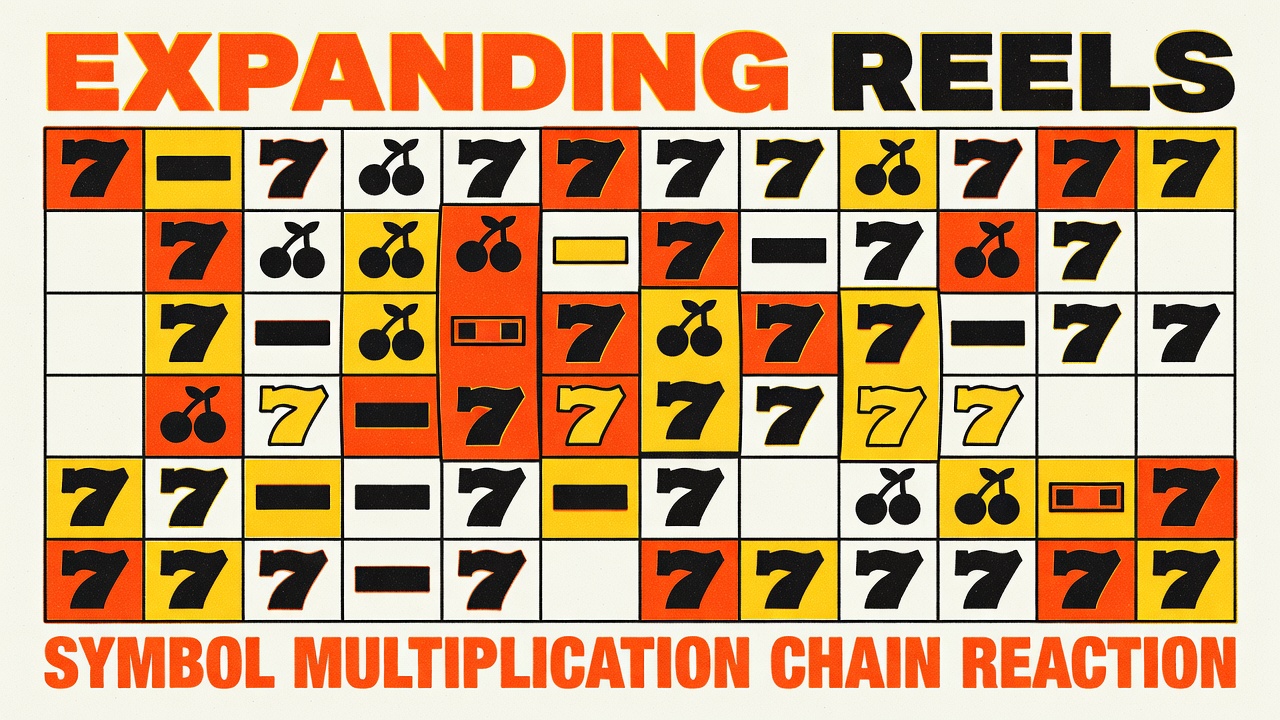
Megaways disrupts this. The proprietary system (patented by Big Time Gaming in 2016) uses reels that vary in height on each spin. A single reel might display two, three, four, or six symbols. Multiply the number of symbols across all reels and you arrive at the "ways to win." On a standard Megaways implementation, you can have between 2,401 and 117,649 ways to win on a single spin. The number changes constantly.
The Mechanical Principle
A normal slot uses fixed paylines. Symbols align on a defined path: left to right, top row, middle row, bottom row, diagonals. Megaways eliminates this. Any matching symbols adjacent horizontally on adjacent reels constitute a win. The reel height variation is not random. It is governed by predetermined algorithms that weight toward smaller reels early in the game and taller reels during free spins bonus features. This creates a deliberate rhythm of volatility.
When you examine the reel mechanics on a title such as Sweet Bonanza (Pragmatic Play, which licensed the Megaways technology), the pattern is observable. Early spins cluster at 2,401 to 5,184 ways. Bonus spins cluster at 6,561 ways and upward. The game is essentially saying: your baseline volatility is high, but we will not give you genuinely high volatility unless you pay for the bonus or unless the bonus itself triggers. This is not accident. It is architecture.
Why Casinos Preferred Megaways
The traditional payline slot presented a problem for operators. The player could calculate odds. A 25-payline machine with 96 percent RTP was transparent. Megaways introduces opacity. When the number of ways shifts from 2,401 to 14,399 to 117,649 across spins, the player cannot hold a stable mental model of their expected return. This psychological discontinuity is the feature, not a byproduct.
Operators adopted Megaways en masse because it permitted higher nominal volatility (more ways to lose, more ways to win, wider swings) without necessarily changing the actual RTP. A Megaways slot returning 96 percent is still a 96 percent RTP machine. But the variance is amplified by the reel-height mechanics. Amplified variance means more excitement, longer play sessions, and more opportunities for the player to tilt and chase losses.
The Bonus Buy Integration
Megaways' true advantage to operators only became apparent when bonus buys arrived. A traditional slot with 25 paylines offered a bonus feature worth, perhaps, 50 to 100 times your stake. A Megaways machine with high volatility and variable reels could offer the same feature but distribute payouts differently during bought bonuses (as discussed in the prior analysis). Operators could market bonus buys aggressively because the Megaways format naturalized the existence of higher-volatility segments.
Evolution Gaming's Megaways live games (if they exist) would function differently, as live dealers can observe player behaviour, but proprietary Megaways slots in online form are engineered to phase between low and high volatility predictably. Early play is economical (lower ways to win). As the player invests more, the machine occasionally awards high-ways spins with modest wins, keeping hope alive. Bonus buys land in the high-volatility zone, where payouts are less frequent but higher when they arrive.
The Legitimate Complaint
From a regulatory standpoint, Megaways occupies an odd space. The UKGC and MGA require transparency in paytables and RTP disclosure. Both are provided for Megaways titles. Technically, the operator is compliant. Ethically, the design creates a cognitive load that many players cannot process. The ways-to-win count is displayed during play. Most players do not understand what it means. They observe it shifting and interpret it as volatility without understanding that the shift is governed by pre-determined weighting, not chance.
The format works because it feels more complex and therefore more fair. A player observing 117,649 ways to win on a single spin may feel they have higher odds than they actually do. The number is true. The inference is false. This is the design's entire point.
Megaways represents the maturation of slot design as a psychological discipline. The mechanics are transparent if you read the paytable. The psychological effect of variable reels and shifting ways-to-win is precisely what the operator intended. It is, in other words, honest deception: technically compliant with regulation whilst being engineered to obscure the player's actual odds. The format is now standard in European gaming. Most contemporary slots released by Pragmatic Play, Big Time Gaming, and their licensees use some form of Megaways variation.