The gambler's fallacy is the belief that past outcomes influence future independent events. If a coin came up heads five times in a row, the gambler thinks tails is now "due." It's not. The next flip is still 50-50.
Roulette creates this illusion perfectly. You watch the wheel. Red comes up eight times in a row. Surely black is coming. You bet black. Red comes up again. You feel cheated. The wheel owes you black.
It doesn't. The wheel doesn't remember. Each spin is independent. The odds of red coming up on any spin are always 48.6 percent (single zero European roulette). The last eight reds don't change the ninth spin's odds. It's still 48.6 percent red, 48.6 percent black, 2.7 percent zero.
Why It Feels Real
Your brain is built to recognize patterns. Pattern recognition kept your ancestors alive: if you saw a predator once, you expected to see it again. If berries were in one spot, you expected to find them there again. The same pattern-recognition tool that saved your ancestors' lives makes you think roulette wheels have memory.
But wheels don't have memory. They're just physics. A tiny ball rolling on a tilted surface. The previous results don't influence the next result.
The Math That Confuses
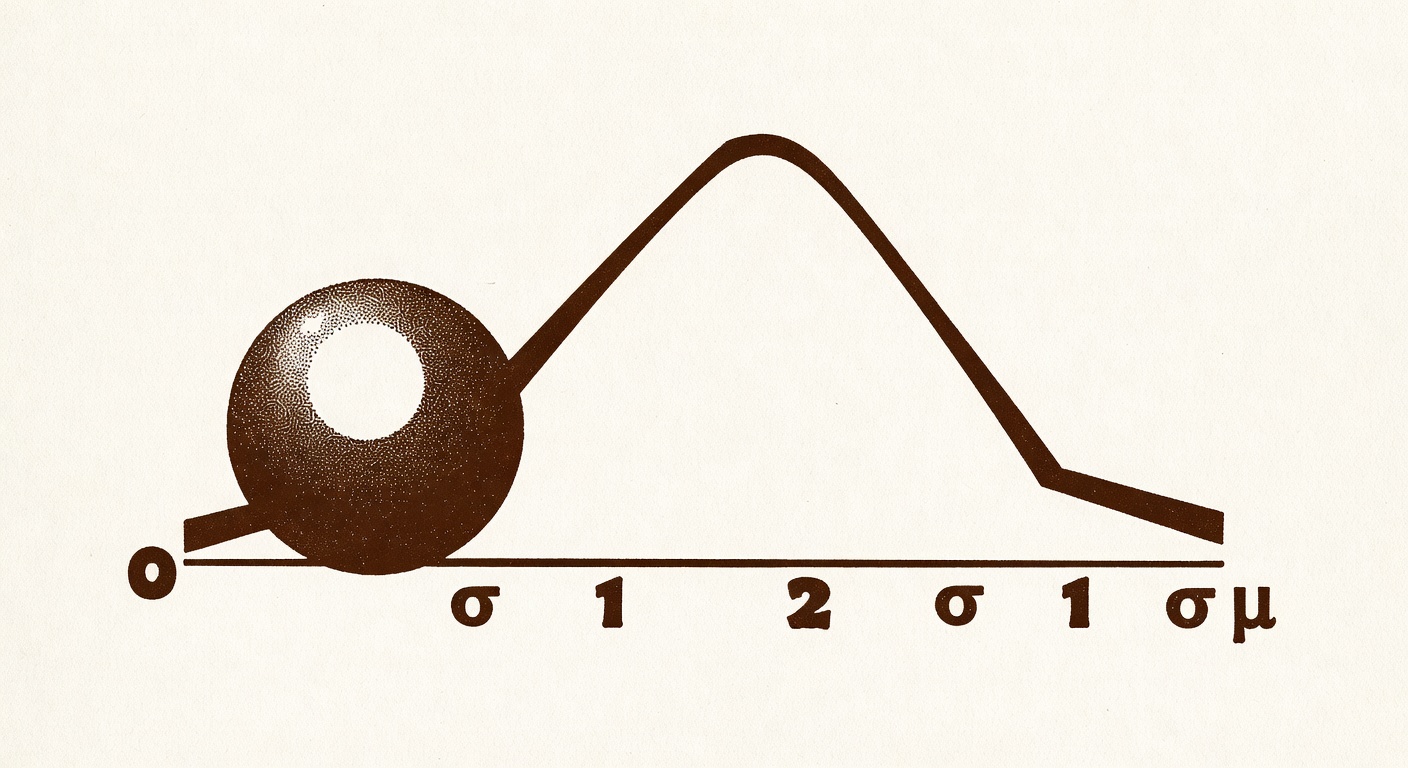
Over a very long run, red and black will appear roughly equally. If red has come up 100 times out of 200 spins, the overall frequency is 50-50. This is the law of large numbers. But here's what confuses people: they think this means future spins will "compensate" for past deviations.
No. What the law of large numbers actually says is: if you keep spinning forever, the ratio will eventually even out. But "eventually" is millions of spins. In the next 100 spins, red might come up 60 times and black 40 times. You'll still be behind the 50-50 expectation. You'll chase, hoping the compensation happens soon. It doesn't.
The Cost
The gambler's fallacy costs money because it leads to chasing. Red came up eight times. You feel strongly black is coming. You bet more. Black doesn't come up. You bet more on the next black. Now you're down 500 dollars on a streak that just happened to run long.
The house has a 2.7 percent edge anyway. The fallacy amplifies this into a 5 or 10 percent loss rate because you're increasing bets after losses (exactly the wrong move from an expected-value standpoint).
What You Should Know
Each spin is independent. The odds don't change. Betting after a streak (because the opposite is "due") is mathematically wrong. It feels right because your brain is wired for pattern recognition. But the feeling is false.
If you play roulette, bet the same amount every time. Bet on red or black and leave. The 2.7 percent edge will grind you down eventually. But at least you won't accelerate the loss by chasing fallacies.
The Compassionate View
I see people fall for this constantly. A woman loses 200 dollars because she was sure red was coming after black came up ten times. I understand the feeling. It feels unfair that the wheel didn't compensate. But fairness isn't part of probability. The wheel doesn't owe you anything. It just spins.
The kindest thing I can tell someone is: if you're playing because you're down and you're chasing, stop. The odds aren't going to turn. You'll just lose more. Walk away. The wheel will be here tomorrow if you want to try again.