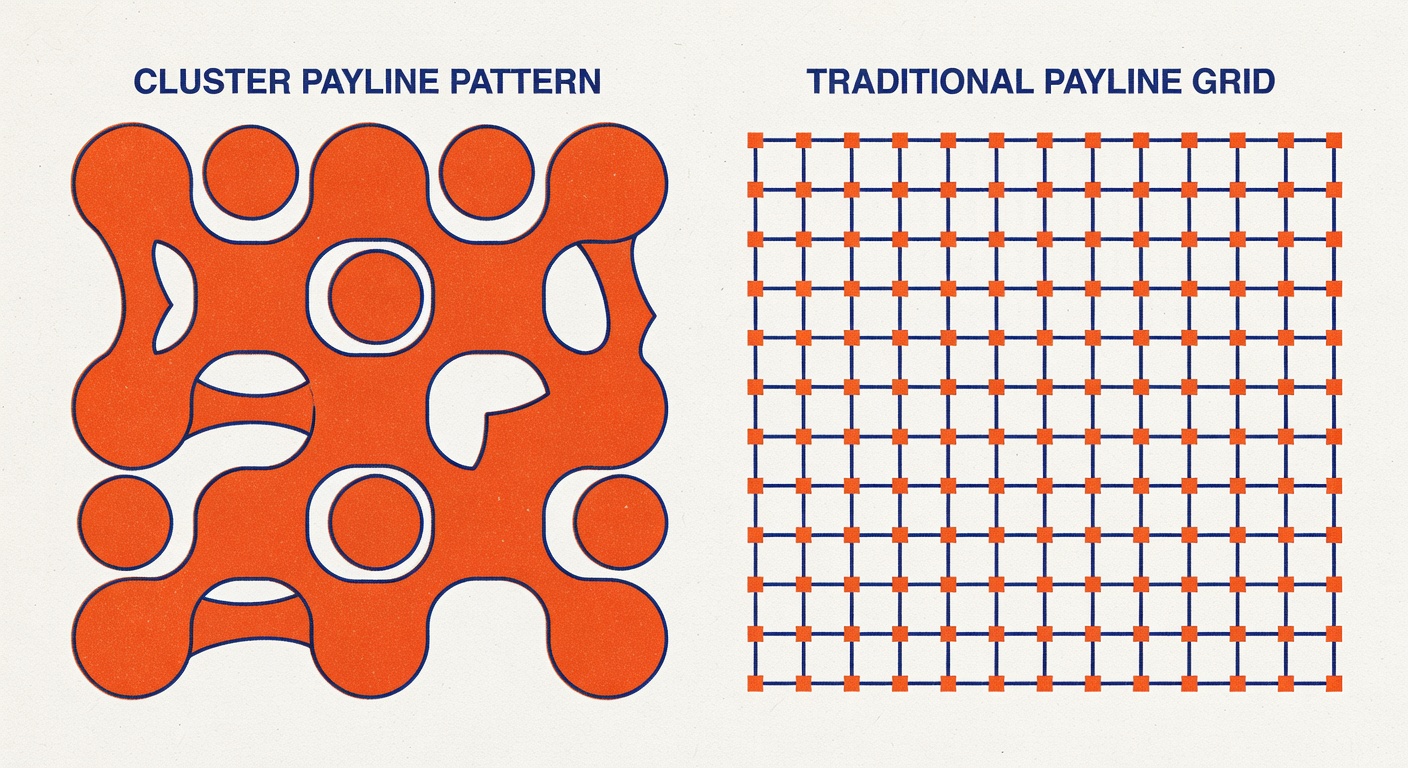
Margaret started on paylines. Seventy-five paylines, a five-reel machine, clear horizontal and diagonal paths. If three cherries landed in the bottom row, she won. She could see the win. She could point to it. A payline slot is honest in that way: you win or you lose, and you know immediately which one.
Cluster pays arrived quietly. The casinos started offering them around 2018. They're everywhere now. Margaret played one at her local club because her daughter Sarah, who is tech-savvy and plays online, said they were the new thing. Margaret didn't understand them that first afternoon. She still doesn't, entirely, but she's kept playing.
How They Look Different
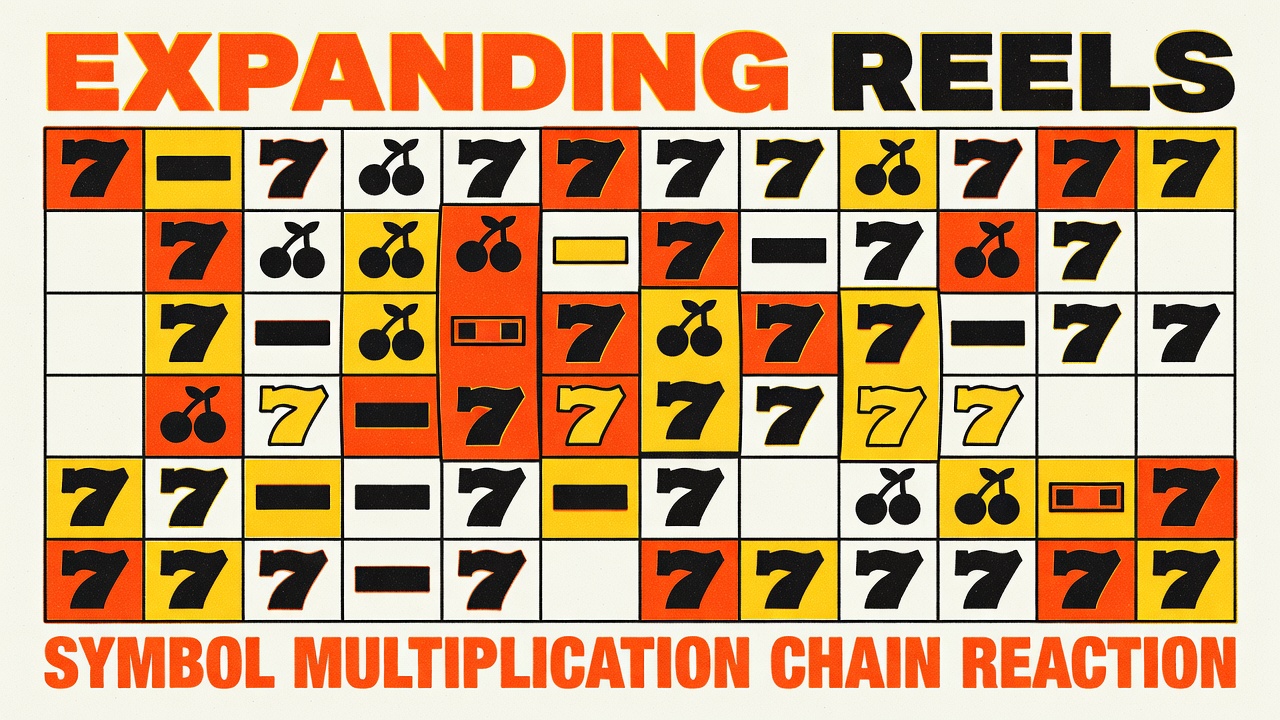
A cluster-pays slot doesn't have paylines. It has a grid: typically five columns, three to five rows. Instead of lining up symbols in predetermined paths, you need adjacent symbols touching horizontally or vertically (or sometimes diagonally, depending on the game). Touch five Ks in a cluster, you win. The game removes the line, adds complexity in exchange.
Pragmatic Play's Sweet Bonanza is cluster-based. Six-by-five grid, 46,656 possible ways to win (that number changes based on reel heights, adding another layer of confusion). A win occurs when four or more of the same symbol are adjacent. The symbols vanish. New symbols drop down from the top. This cascade effect is one of cluster-pays' defining features.
Payline slots don't have cascades. Land your win, the symbols sit there, static, for a moment of clarity. Then the reels spin again. Cluster-pays games feel more active because winning symbols disappear and new ones fall. It's the same mechanic as match-three games (Candy Crush, Bejeweled), which people find satisfying. The satisfaction is the point.
The Hidden Cost
Margaret noticed after a few sessions that she'd played for four hours but only remembered two big wins. With payline slots, wins felt discrete. She'd see three matching symbols, the light would flash, her balance would update. With cluster-pays, wins blur together. A cascade might generate five winning clusters in sequence, and the game shows her all of them simultaneously with animations. She doesn't remember five separate wins. She remembers one long cascade.
This matters more than it seems. Research on slot psychology shows that players estimate their return based on win frequency. A cluster-pays cascade of five wins feels like one big win to the player but counts as five toward the game's statistics. The game returns the same amount; the player's perception changes. Casinos use this deliberately.
The Volatility Restructuring
Payline slots with 75 lines spread risk across many small ways to win. Cluster-pays games concentrate volatility. You go longer between wins (fewer opportunities for small matches), but when you win, you often get a cascade that chains multiple wins. The expected value is identical to a payline game with the same RTP (96 to 97 percent, typically). The variance is different.
A payline player might see 30 spins, lose 20, win 10, break even slightly. A cluster-pays player might see 30 spins, lose 25, win 5 times (with cascades), and end up in the same place mathematically but experience it as either terrible ("I didn't win for 25 spins") or exciting ("That last win was huge").
What Margaret Learned Slowly
Margaret started thinking she understood cluster-pays after two weeks. She was wrong. She's been playing eight months and still doesn't fully understand the cascade mechanic. Sometimes she wins when symbols vanish and new ones fall. Sometimes the game tells her a cascade didn't happen and she's confused. The game's win condition is less transparent than paylines because the winning cluster isn't obvious until the cascade resolves.
Payline games are easier on players cognitively. You can see the line. You can understand why you won. Cluster-pays games require you to either understand the grid logic or accept that the game knows when you've won better than you do. Most players choose the latter, which is what the casino prefers.
The Operator's Advantage
Cluster-pays games generate longer play sessions than payline games with the same RTP. Not because the player is winning more (they're not), but because the format is more engaging. The cascades feel interactive. The grid is visual in a different way than paylines. Players report enjoying cluster-pays more than paylines, even when they lose more money.
Margaret asked her daughter last week if there's a strategy to cluster-pays games. Sarah said: "No, you just watch them play." That's the key difference. Payline slots feel like games of chance where you're choosing something. Cluster-pays games feel like entertainment where you're watching something. The second feels less like gambling, which means Margaret plays longer without the emotional friction that stopping usually provides. The house loves this.
Margaret still prefers payline slots. But she plays cluster-pays more now because they're more prevalent. Her daughter says that's the future. The paylines are slowly disappearing from the casino floor, replaced by grids, cascades, and animations that make losing feel like watching television rather than losing money. For casinos, the format is a small victory: same payout, better player retention. For Margaret, it's the difference between understanding what happened and watching something happen to her.