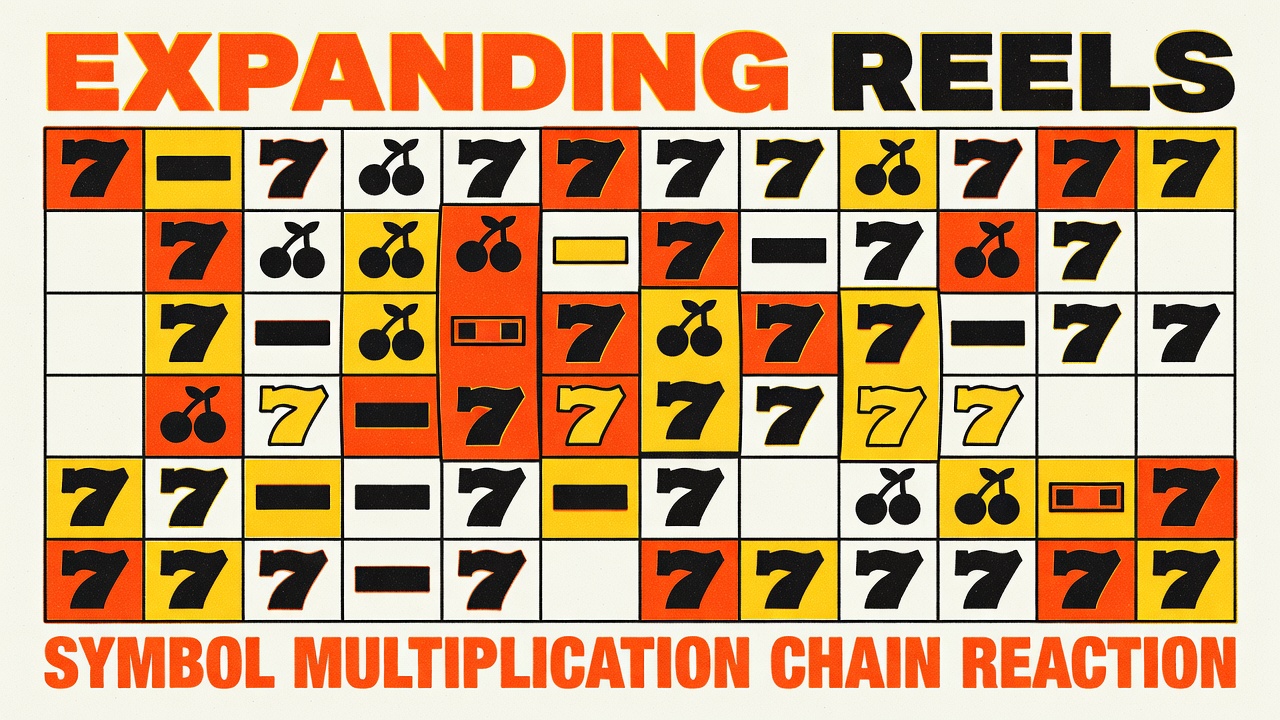
Cascading reels, also called tumble mechanics, are one of the biggest changes to slot design in the past twenty years. You see them everywhere now: NetEnt's Starburst, Pragmatic Play's Gate of Olympus, all the modern Aristocrat games. I spent three years as a technician rebuilding older Bally cabinets and I can tell you with confidence: this is not how slots used to work.
The basic mechanic is simple. A spin lands a winning combination. Instead of that spin ending, the winning symbols lock in place. The non-winning symbols disappear. New symbols fall down to fill the gaps. If those new symbols form another winner, the process repeats. The same bet that typically pays out once now can pay out five, ten, sometimes twenty times from a single initial spin.
How the Math Actually Changes
In classic slots, the RNG determines the outcome before the reels even stop. The physical reels are theater. With cascading reels, the initial spin is still RNG-controlled, but the subsequent cascades are deterministic. The game engine knows exactly what will fall and in what order. This is important: the total return to player percentage, the RTP, is baked in at design time. A Gate of Olympus clone with 96% RTP has that 96% factored in across all possible cascade sequences.
The prize pool doesn't change. What changes is volatility. Classic 3-reel slots are medium volatility. Cascades are high volatility. Your €1 bet might stay at €1 for 200 spins, then hit a cascade sequence that pays €150. The mathematical payout is identical to a non-cascading game with the same RTP, but the experience of bankroll swings is completely different.
NetEnt and Pragmatic Play publish their certified test reports. You can verify this. A certified lab (iTech Labs, NMi, GLI) tests thousands of spins and confirms the RTP. Cascades don't hide anything; they just rearrange when the payouts happen.
The Player's Experience
From the player's seat, cascades create what I'll call momentum. A winning combination triggers a cascade. You watch the symbols fall. The anticipation is real. But here's what matters technically: if you were going to lose on spin 243, you're still going to lose on spin 243. The cascade just delayed when you see that loss.
I've seen operators worry that cascades somehow trick the player into thinking they're winning more. That's not accurate. The RNG outcome is final before the cascade begins. The cascade is animation plus probability. Modern slots are transparent about this in their machine certification.
Cabinet Design Implications
Cascades changed how slot cabinets are engineered. Older Bally and IGT machines had fixed reel positions. Everything was mechanical. A cascading reel system requires a fully digital display. You need processor speed to calculate the cascade in real-time. You need screen resolution to make the falling symbols readable and engaging.
When I worked on the older machines, durability was the constraint. A mechanical reel had maybe 5,000 spins before the bearings wore. Digital cabinets like the Aristocrat Orion or the IGT Sphinx now run 50,000+ spins without degradation. No mechanical wear means the cascade sequences can run reliably for years.
Why Operators Adopted This
Operators don't choose a game format because it's new. They choose it because it increases time on device. A player at a classic 3-reel machine makes a decision every 3 seconds: spin again or leave. A cascade machine creates moments of hope between spins. A losing spin might become a winning cascade. That uncertainty keeps players seated longer.
The mathematics don't favor the player. A 96% RTP slot is a 96% RTP slot, cascading or not. But the illusion of momentum, of things changing after the initial decision point, extends average session length. That's why you see cascades in every modern suite.
Technical Integrity
One last point because it matters: cascading reels are not rigged in the sense that people sometimes suspect. A certified game with cascades has been tested by independent labs. The RNG is audited. The payout percentages are locked in firmware. You cannot change them without breaking certification. An unlicensed online operator might claim cascades they don't deliver, but a licensed operator (Stake, DraftKings, Bet365 where they offer slots) has their RNG certified and their payout rates published.
I don't have romance about slots. I've seen the inside of every major cabinet from 1998 to now. Cascading reels are an elegant solution to a problem: how do you keep players engaged without raising the theoretical payout percentage. The answer is volatility plus hope. And the math, certified and auditable, backs it up.