The Setup
Megabucks is a progressive slot machine system run by IGT. Multiple casinos across Las Vegas link their machines to a shared progressive jackpot. When anyone plays on any Megabucks machine in any participating casino, a percentage of their bet feeds into the shared pool.
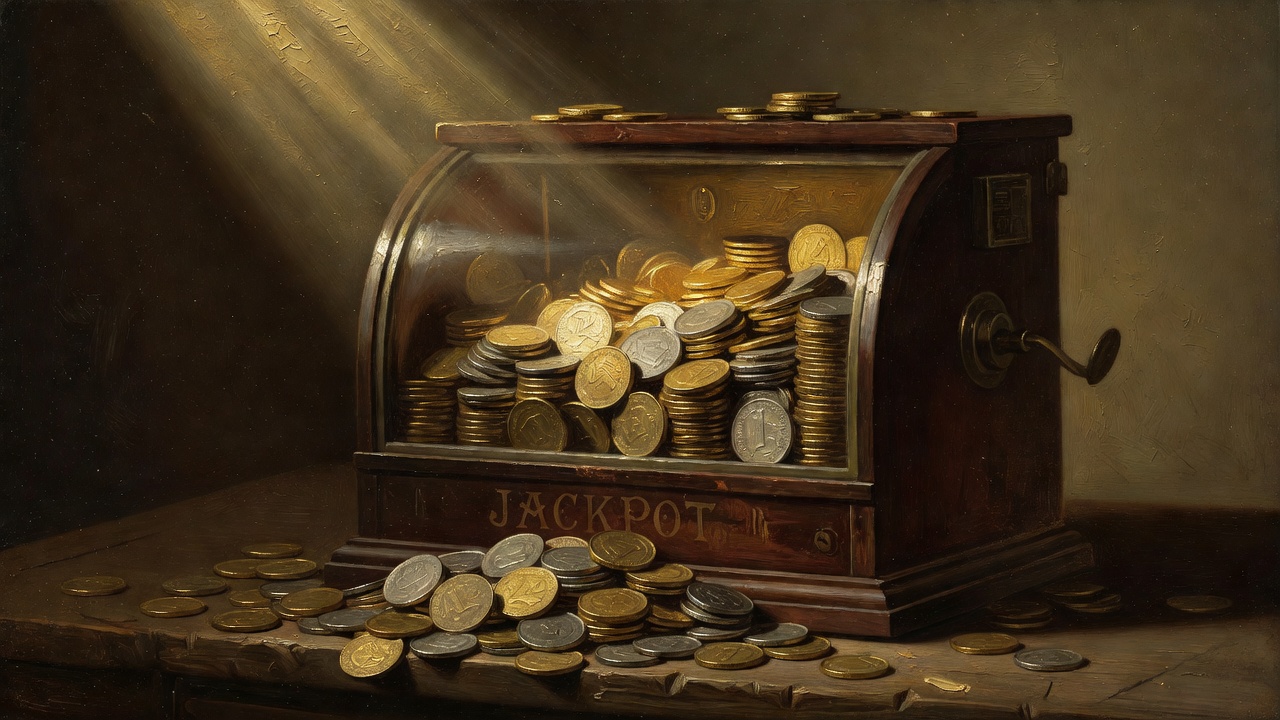
The jackpot grows. And grows. In 1999, it had grown to $39 million. The largest progressive jackpot in history at that time.
On March 16, 1999, at the Excalibur casino, someone hit the Megabucks jackpot. The news made Vegas headlines. Someone won $39 million on a $100 spin.
The Actual Payout
Here's where the story gets complicated: $39 million doesn't mean they got $39 million. Jackpots that large are structured as annuities. The winner gets about $1.5 million annually for 25 years, or they can take a lump sum of approximately $22 million after taxes.
Federal taxes, Nevada state taxes, casino taxes. By the time the winner took the lump sum, they had approximately $14 million. Still life-changing. But not 39 million.
The Machine Odds
Megabucks has two possible outcomes: you win the jackpot, or you lose. There's no break-even. There's no small win that doesn't matter. The RNG is programmed with a specific probability.
The odds of hitting the Megabucks jackpot are approximately 1 in 50 million.
That means that for every person who wins the $39 million jackpot, roughly 50 million other people have fed into that pool. If the average bet is $1 and each bet contributes $0.02 to the progressive, that's $1 million fed into the pool per 50 million spins.
But the pool paid out $39 million. The math breaks down because not every bet feeds equally. But the structure is clear: the casinos are funding the lottery, then taking a cut when someone wins.
Why This Happened
The Megabucks jackpot got so large because it hadn't been hit in a long time. The odds of hitting it are so astronomical that the progressive grows for months or years before someone gets lucky.
This is the design: create a large enough jackpot that word spreads. Get people traveling to Vegas specifically to play Megabucks. Feed millions into the pool. Hope nobody hits for years. When someone finally hits, take the media splash and use it to get more people to play.
The Trap
The Megabucks winner gets written about in newspapers and magazines. People hear the story. They think about 1-in-50-million odds and assume that odds of 1-in-50-million mean they might win.
They don't. 1-in-50-million odds means you need to play 50 million spins to have an expected value approach of breaking even (which you won't, because the machine has a house edge). Most players will lose money far before their expected value catches up.
The Megabucks machine has a house edge of approximately 35 percent. That means that across all plays, the casino keeps 35 cents of every dollar wagered. The progressive jackpot is funded out of that 35 percent. When the jackpot is large enough, it draws players, and the casino gets richer.
The Winner Today
The record for Megabucks was later beaten. In 2003, someone won $40.8 million at the Luxor. The odds are still 1-in-50-million. The house edge is still 35 percent. The trap is still the same.
Winning a progressive jackpot is not luck in the sense that you made a good decision. It's luck in the sense that lightning struck. The decision to play Megabucks is always a bad decision with negative expected value. The winner is celebrated because they beat 50-million-to-one odds. They shouldn't have been playing at those odds in the first place.