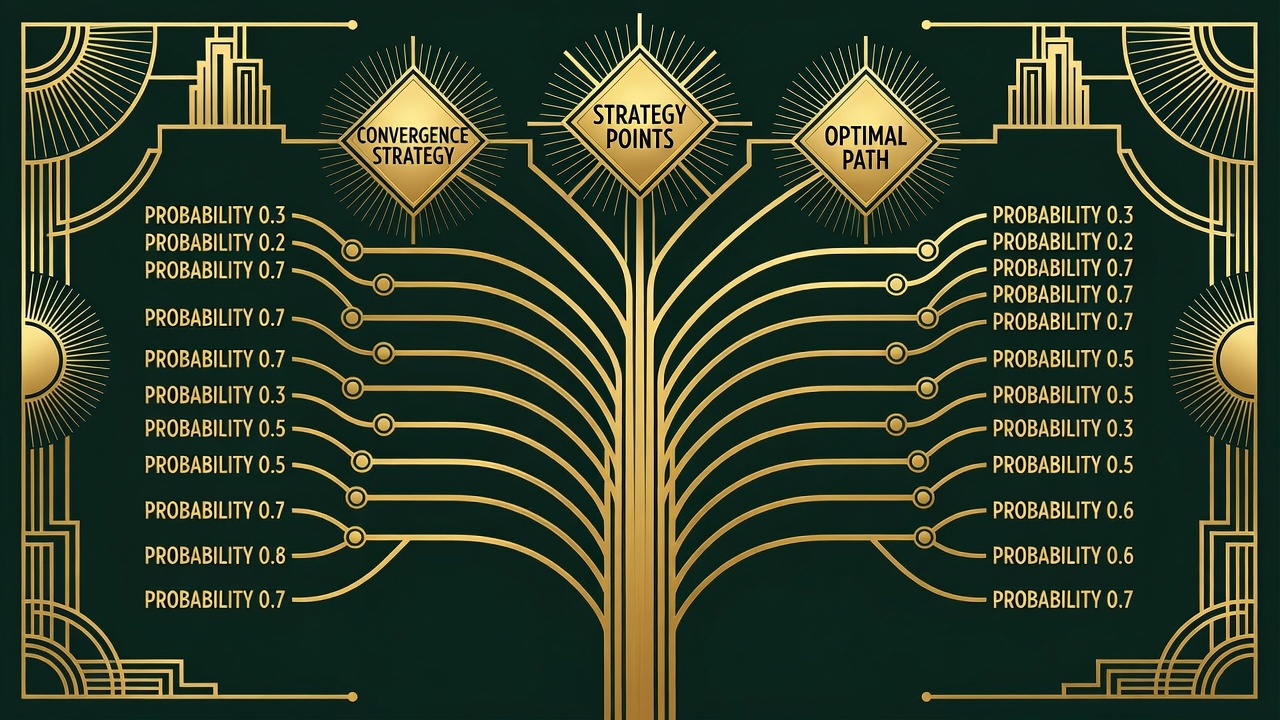
GTO is the academic approach to poker. You calculate the mathematically optimal play for every situation assuming your opponent is equally skilled and playing perfectly. You mix your plays randomly to avoid being exploited. You balance your ranges carefully. The result is a strategy that cannot be beaten if your opponent is also playing GTO. A winning player might use GTO as their baseline and exploit as their attack. They switch strategies mid-hand based on new information. This requires real-time analysis of opponents and willingness to abandon prepared patterns. Most players cannot do this.
They are undervaluing certain hands.
But almost no real opponents are playing GTO. They are making mistakes. They are too tight. They are too loose. They are undervaluing certain hands. They are overvaluing others. The moment you identify a mistake, GTO becomes suboptimal. You should exploit that mistake.
Exploitative play is punishing specific errors. An opponent who folds too often to aggression should face aggression. An opponent who calls too often with weak hands should bet for value more. An opponent who plays the same strategy from every position should adjust your position play accordingly. The goal is not to play perfectly; it is to play profitably against this specific opponent.
Here is the tension: if you exploit an opponent too obviously, they adapt. You start bluffing constantly because they fold to aggression, they adjust and start calling more. Now your constant bluffing is no longer profitable. You have to switch back to a more balanced approach or shift your exploits to a different dimension.
A professional player is constantly balancing. Against an unknown opponent or in early position in the match, you play close to GTO. Against an opponent with clear mistakes, you exploit. As the match progresses, you shift based on what you learn. You are mixing strategies.
The problem is that GTO solvers (computers that calculate optimal play) only work with simplified games. Real poker has so many decision points that complete GTO is not computable. Players instead use GTO principles: mix your plays, balance your ranges, do not give up too much information. They use this as a foundation and then exploit on top of it.
The meta-game is that professionals who know GTO often play against amateurs who do not. The professional starts exploitative (attacking obvious mistakes) and only switches to GTO-ish play if the amateur starts adjusting. This is a sound strategy because most amateurs never adjust. They keep making the same mistakes until they have lost their stack.
The practical line: if you are learning poker, learn GTO principles first. You need a baseline. Then learn to identify errors and exploit them. The best players do both, switching fluidly between strict optimal play and opportunistic exploitation.
GTO play looks boring because it is boring. It is also profitable. Exploitative play looks exciting because it rewards courage and risk. It is also variance-heavy. The professional players know when to be boring. The problem with GTO-only play is that it requires perfect play against perfect opposition. Against imperfect opponents, it leaves money on the table. The problem with exploitative-only play is that it requires accurate opponent reads and can be exploited in return. The balance is the skill.