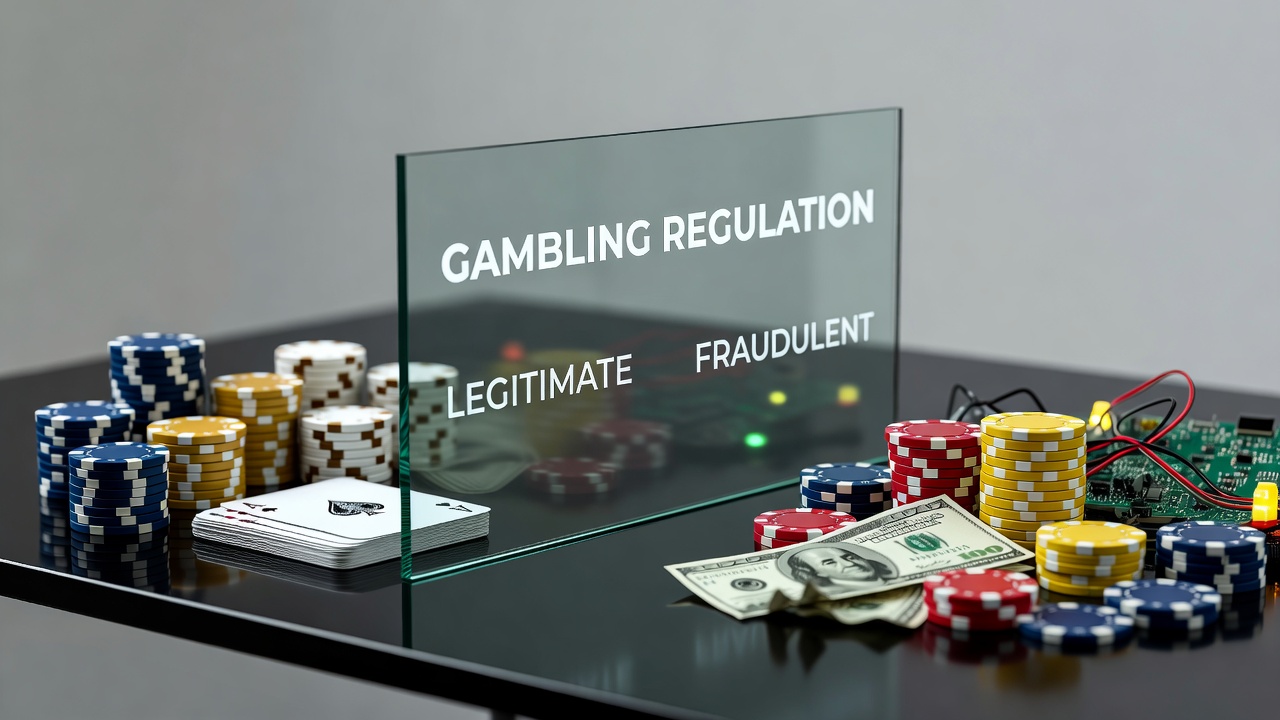
The Original Sin
Online gambling emerged in 1995 in jurisdictions that didn't care what you did if you paid them taxes. Antigua. Neviscorp. Places where regulating online gambling meant getting an office and a letterhead and maybe a guy who knew poker rules.
The first casinos were scams. Simple ones. They would take your money, not pay your winnings, and move to a new domain name when your chargebacks got too loud. The industry had approximately the infrastructure of a cocaine cartel and perhaps less scrupulosity.
This worked until credit card companies started getting hammered by chargebacks. Casinos making $5 million a month would generate $3 million in chargebacks. Payment processors realized they had a problem and started refusing to process casino transactions entirely.
That's when regulation became valuable. If a casino could say "we're licensed in Malta and follow MGA standards," payment processors could accept deposits with some confidence that the casino wouldn't simply disappear next Tuesday.
The Regulatory Systems
Malta was first. The MGA (Malta Gaming Authority) created a licensing framework. You had to prove you had real capital. You had to demonstrate that your RNG was audited. You had to have AML procedures. You had to pay taxes. The government was basically saying: we will license you if you're not completely criminal.
That moved the needle. Not to honest, but from "certain to be defrauded" to "probably legitimate."
Other jurisdictions followed. UK (UKGC). Gibraltar. Isle of Man. Curaçao. Each one created a different standard. UKGC was strict. Curaçao was loose. Gibraltar was somewhere between.
Why It Exists
Regulation exists for three reasons. First: tax revenue. A licensed casino in Malta pays 35 percent tax on gaming revenue. That's not nothing.
Second: protection from catastrophic fraud. If a casino is licensed and regulated, and they cheat you, you have a regulatory recourse. You can file a complaint with the MGA, and the MGA can investigate. Can they recover your money? Not always. But there's at least a procedure.
Third: payment processor confidence. Visa and Mastercard will not process transactions for unlicensed casinos. You need a license to get on the payment system. The license becomes proof that you're not the absolute worst option.
What Regulation Doesn't Do
Regulation does not guarantee the casino is honest. Regulation creates incentive for honesty (you lose your license if you're caught cheating) but it doesn't eliminate temptation or create certainty.
Regulation also doesn't protect you from bad luck. A licensed casino can have a worse house edge than an unlicensed one. A licensed casino can have bad customer service. A licensed casino can make terrible decisions about player protection and only get fined after the fact.
The Trust Layer
When you play at a regulated casino, what you're actually buying is bureaucracy. You're buying the idea that if something goes catastrophically wrong, there's an entity (the regulator) that can force the casino to make it right.
Is that entity always competent? No. Is that entity always honest? No. Is that entity better than nothing? Definitely.
Regulation evolved because online gambling proved that human honesty, left to itself, gravitates toward theft. Regulation is not honesty. Regulation is friction against theft. Enough friction that the casino makes more money by being honest than by cheating.
That's all regulation can do.