Poker players talk about pot odds like they're a gateway skill. Calculate the ratio of the pot to your bet. If the odds are right, call. If not, fold. Clean logic.
The mechanism is sound. The reason we need it is darker.
Claim: Pot Odds Tell You When to Fold
Reality: Pot odds exist because poker is designed to punish impatient players.
Poker is a game where the person with the best hand wins. But before that, someone has to decide which hands are worth playing. Pot odds is the framework for that decision.
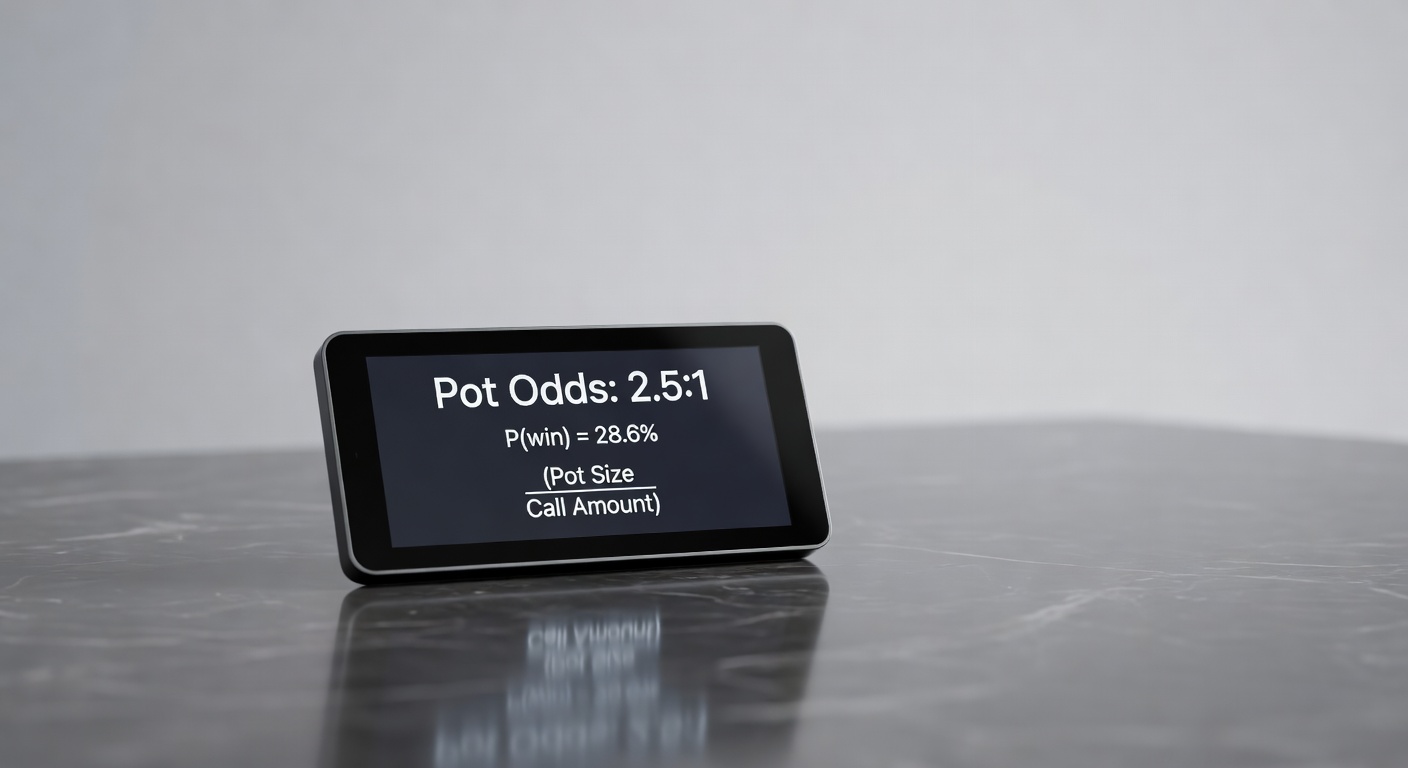
You are on the river. Your flush draw missed. The pot is 100 dollars. Your opponent bets 30 dollars. Pot odds say the pot is now 130 dollars total, and you're being asked to risk 30 to win 130, which is a 4.3 to 1 ratio. Your hand has about a 20 percent chance of winning (roughly 5 to 1 against). The math says fold.
This math is correct. The reason the math exists is that poker forces this calculation. In other games, you simply play better hands and fold worse hands. Poker has shaped the skill requirement around this specific calculus.
Claim: Pot Odds Are Hard to Calculate in Real Time
Reality: They are easy to calculate but hard to trust.
A beginner calculates: pot is 100, bet is 30, so the ratio is 130 to 30, roughly 4 to 1. Any hand that wins more than one-in-five times should call.
The hard part is not the division. The hard part is estimating your actual win percentage. You must account for opponent ranges, position, the board runout, and the chance you're already beaten.
That estimation is where the magic lives. And where the discipline breaks down.
Claim: Using Pot Odds Will Make You Money
Reality: Using pot odds will stop you from hemorrhaging money.
I've watched casual players call with 12-high because the pot was big. I've seen them say "the pot odds were good." This is fantasy. The pot odds were irrelevant if their hand had zero percent equity.
Pot odds is a necessary check on impulse. It is not a profit machine. It is a brake.
Professional players use pot odds as one input among many. They also consider position, opponent tendencies, stack sizes, and image. Pot odds is the hygiene requirement. It's the thing that stops you from losing money on clearly unwinnable hands.
Where It Breaks
The real risk is treating pot odds as predictive. You calculate that your hand should win 30 percent of the time. You call. You lose. You decide pot odds failed you.
Pot odds is a long-run concept. Over a thousand hands with 4 to 1 odds against you, you expect to win about one of them. In any single instance, you might lose five in a row. The tool is sound. The sample size is what matters.
Beginning players often underestimate how long a long-run is. They play 50 hands, check their results, and declare the math broken. This is like flipping a coin five times, getting four heads, and concluding coins are biased toward heads.
What Pot Odds Is Actually For
Pot odds is a filter for bad decisions. It doesn't make you money. It stops you from actively destroying your money. This is valuable enough.