The Boardwalk in 1985 was something. You walked past the Ocean One and the Taj Mahal and there were players everywhere. Dealers wore vests, the carpeting was a specific blue-gray color that I can still see in my sleep, and you could smell the cigarette smoke from the street. Inside the poker rooms, the games were slow. People were new. The rake was brutal, fifteen percent in some rooms, and even with that rake, a competent player could grind out sixty, seventy dollars an hour.
This was not about being brilliant
This was not about being brilliant. It was about being disciplined. You played tight. You folded weak hands. You got value when you had something. The tourists did not know you were doing this. They thought poker was luck. They were losing money to a structural misunderstanding. They kept coming back because they did not realize the game was solvable.
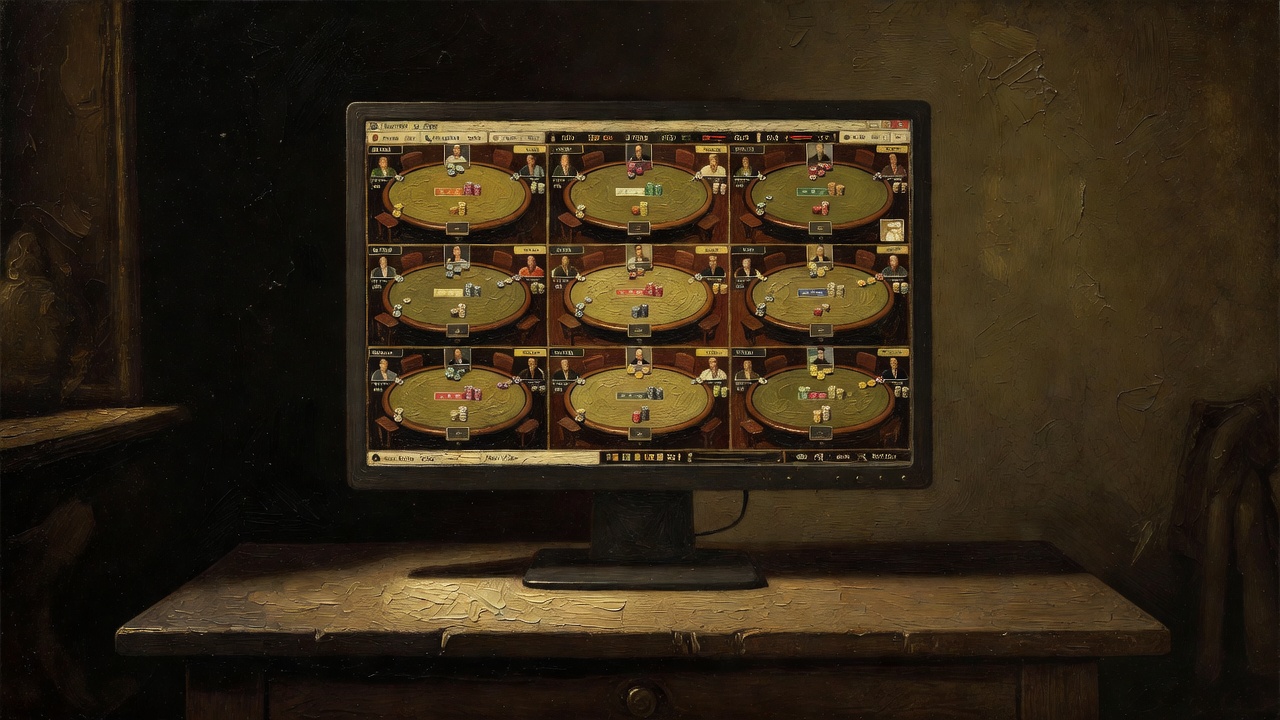
Now the tourists are online. They sit in $0.01/$0.02 games because the buy-in is small and the games feel safer. They are wrong on both counts. The games are not safer; they are faster. You see 100 hands an hour instead of 30. The variance is smaller but the rate of loss is identical. And there is something else: the players are far more informed than they were in 1985.
Beat low-stakes games by understanding where the leaks are. The rake structure is the first place. Online games have 5 percent rake with a maximum cap. That means in a $20 pot, the house takes a dollar. In a $1000 pot, the house takes five dollars. The absolute rake is the same, but the percentage cost decreases as the pot grows. Play pots that are large relative to the rake. Do not play weak hands; it means you are playing small pots where the rake is a much larger percentage of the pot.
Second, exploit tight players. In $0.01/$0.02, many players do not understand pot odds and position. They fold too much. They play overly tight from early position. If you are moderately intelligent, you can observe this and steal their blinds. You do not need to beat them in a hand; you just need to win pots where they fold.
Third, understand that online players at micro-stakes are not using GTO (game theory optimal). They are leaking money through exploitable patterns. If a player always 3-bets with strong hands and folds to aggression with marginal hands, you adjust. You do not need to be perfect; you need to be less leaky than they are.
The hard truth: $0.01/$0.02 online poker is not a path to wealth. After rake and taxes and the cost of your time, you are making maybe $10-20 per hour if you are winning. That is the ceiling, not the floor. Most players below that. The old Atlantic City games were the same. The profit was real but small. The difference is that in 1985, if you were beating the game, you felt rich. Now, beating the same game makes you feel like you have found a clever way to be poor.