The Setup
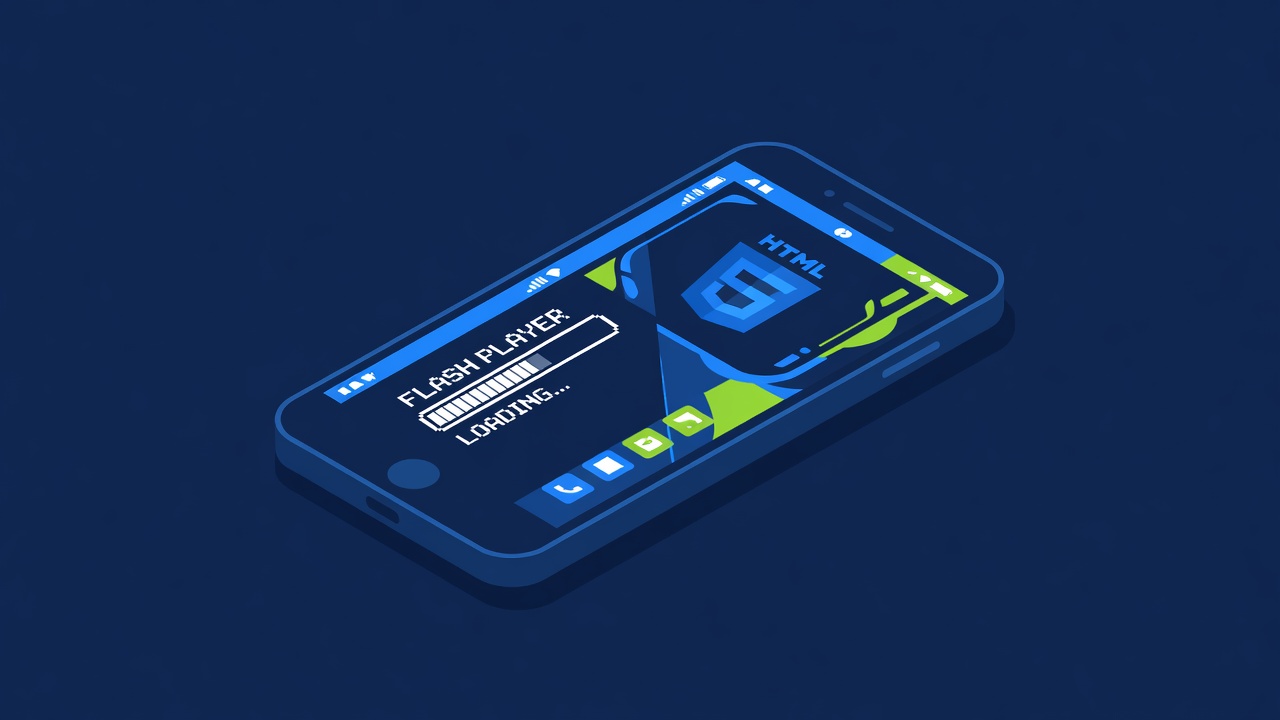
It is 2008. Mobile phones are becoming more powerful. Apple releases the iPhone and pointedly refuses to support Flash.
At the time, online casinos delivered games through Flash. Flash was the standard. But Flash was also proprietary, energy-intensive, and required a plugin.
Apple said no. Flash was not welcome on iOS.
The Problem
Casino operators faced a choice. Support Apple devices (and lose the installed base of Flash) or maintain Flash (and lose access to the most valuable phone market).
HTML5 was the alternative. Open standard. No plugin required. Works on all devices.
But HTML5 in 2008 was immature. It could not do the graphics, the animations, or the performance that Flash could. Converting a Flash game to HTML5 meant compromising quality.
The Years of Struggle
From 2010 to 2015, casinos gradually converted their games to HTML5. It was expensive. It was slow. Casinos created hybrid products (Flash on desktop, HTML5 on mobile) to bridge the gap.
Players experienced the difference. A slot game that ran smooth on desktop ran laggy on mobile. The experience was degraded.
The Technology Maturation
By 2015, HTML5 had matured. JavaScript engines were faster. WebGL provided 3D graphics. The performance gap between Flash and HTML5 closed.
By 2020, the gap was irrelevant. HTML5 games were indistinguishable from Flash games in terms of quality.
The Consequences
The shift to HTML5 did three things. First, it made mobile gambling more accessible. Players could gamble from their phone without installing an app. A browser opened a game instantly.
Second, it made cross-platform development easier. A game coded once in HTML5 worked on iOS, Android, desktop, tablet.
Third, it enabled responsive design. Games automatically scaled to screen size. A game looked good on a phone and on a desktop without separate development.
The Behavioral Consequence
Mobile gaming exploded after HTML5. Accessibility increased. Playing a slot on a train became normal. Playing baccarat during a break at work became trivial.
The friction of downloading an app was gone. The friction of sitting at a computer was gone. The only friction was: open a browser, navigate to the casino, play.
This barrier reduction increased player behaviour. More people played more frequently.
The Industry Impact
Casinos that were slow to adopt HTML5 lost market share. Casinos that invested in responsive design and optimized for mobile gained users.
Online gambling shifted from desktop-dominated to mobile-dominant. By 2020, the majority of online gambling was happening on mobile devices.
The Security Impact
HTML5 is web-based, which means it goes through browsers, which means it is subject to browser security. Flash had its own security model.
The shift made casinos more dependent on browser security and less able to implement their own security. This created new attack surfaces.
The Present Day
HTML5 is now the standard. Flash is dead. Adobe discontinued Flash in 2020. Modern casinos support HTML5 exclusively.
The shift happened over a decade. It was not dramatic. No news headlines. But the consequences were enormous for player behaviour and industry economics.
The Lesson
Technology changes that seem minor (Flash to HTML5) have enormous behavioural consequences. Removing friction leads to more use. Making things more accessible changes how people behave.
Casinos understood this. They invested heavily in HTML5 because they knew it would increase engagement. The technology was the tool. The goal was always to remove barriers to play.
The most consequential changes are not the ones people notice. They are the ones that reduce friction.