A table game session is measured in hours. You sit down at a blackjack table with 500 dollars. You expect to be there 4 to 6 hours. You want a deposit method that gets the money to your account fast enough to play, and doesn't have friction that interrupts the session.
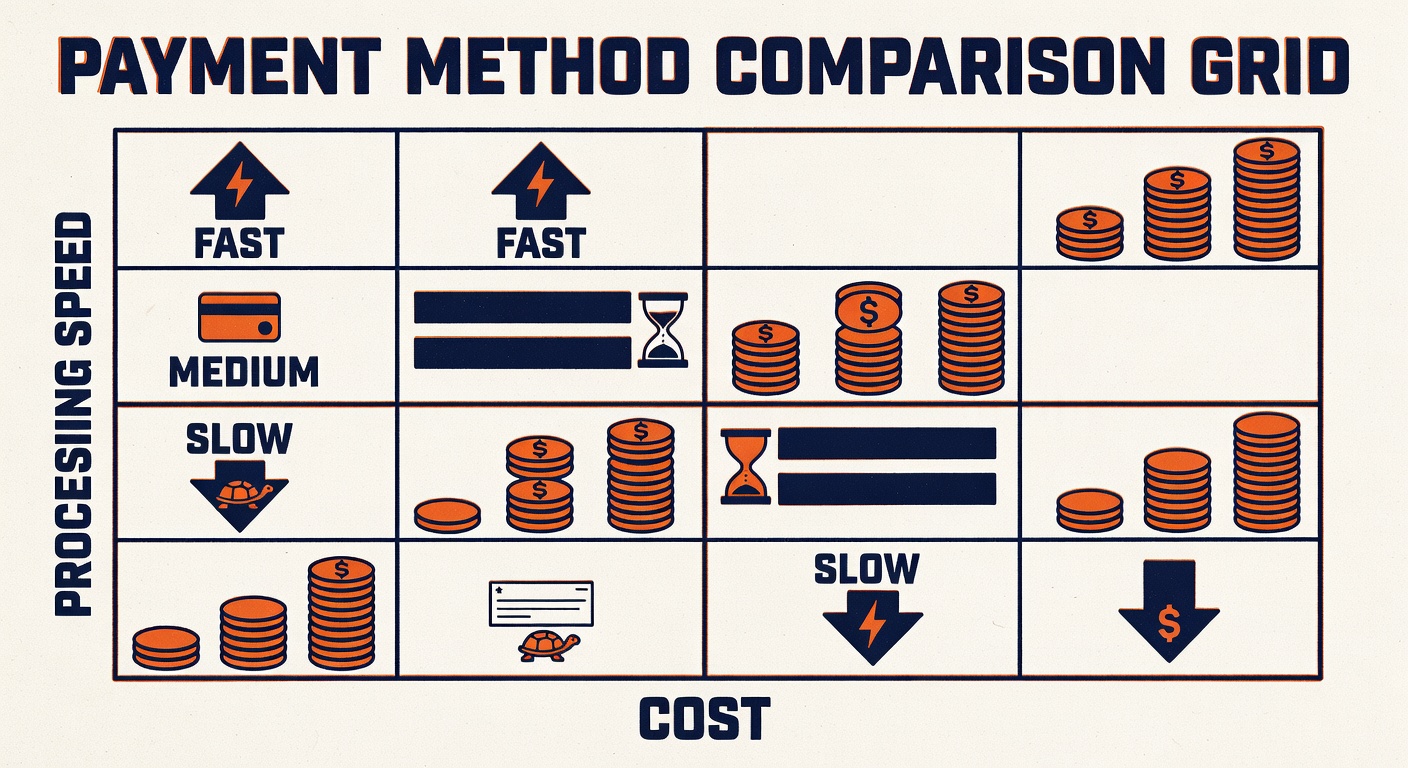
Debit cards take 10 to 20 minutes to process. Bank transfers take 24 to 48 hours (sometimes instantly, depending on the bank). E-wallets like Skrill or Neteller take 10 to 30 minutes. Crypto takes 5 to 15 minutes depending on the blockchain (Bitcoin is slower, Litecoin and Ethereum are faster). For a session starting in the next few hours, only crypto and e-wallets work.
The Debit Card Issue
A debit card deposit to BetRivers shows up as 3 to 5 transactions on your bank statement, not one. Each transaction has a processing fee (sometimes). Your bank flags the cascade of deposits as potential fraud and blocks the fourth one. You're locked out mid-session. This happens repeatedly. The friction is high.
Casinos using stripe or other payment processors face merchant restrictions. Stripe doesn't like gambling. It charges 2.9 percent plus 30 cents per transaction. A 500-dollar deposit costs 15.50 dollars in fees. Debit cards are expensive and slow for casinos, so they pushed players toward e-wallets and crypto.
The Crypto Advantage
Crypto (Litecoin especially, Bitcoin also works but slower) clears without intermediaries. You send LTC from your wallet. Stake or Pragmatic Play receives it. Five minutes later, you're playing. No bank authorization needed. No fraud detection. The transaction is irreversible once confirmed.
This is the point: crypto is final. Debit cards are reversible (you can chargeback). Crypto is not. Casinos love finality because chargebacks are expensive (they cost 15 to 25 dollars in processing fees and often result in the customer winning the dispute). Crypto removes chargeback risk.
The Settlement Speed Trade-Off
E-wallets (Skrill, Neteller) are faster than debit (10 to 30 minutes) but have fees (3 to 5 percent) and daily limits (often 5,000 dollars maximum per day). For a casual player, e-wallet is fine. For a high-roller, it's a limitation.
Crypto has no limits and no fees (just the blockchain fee, roughly 0.50 to 1 dollar for LTC or ETH regardless of amount). But crypto requires technical knowledge (wallet setup, seed phrases, exchange access). Casual players don't have this.
What Works Best
For table game sessions under 6 hours: crypto or e-wallet. Both clear fast enough that you can sit down and play. Crypto is better if you're playing frequently (no percentage fees) and worse if you're playing casually (setup friction). E-wallet is better for casual play (less technical) and worse for high-stakes (daily limits).
For casual players (500 to 1,000 dollars per session): e-wallet. For regular grinders (weekly sessions, 2,000+ per session): crypto. For everyone else: just accept the friction of debit cards and bank transfers. You're not playing often enough for the optimization to matter.
The Hidden Cost
Choosing a slower deposit method creates unintended friction that changes your decision-making. You transfer 500 dollars via bank wire. It takes 48 hours. You spend two days anticipating the session. You get excited. You finally deposit. You're now emotionally primed. You play longer, bet bigger, lose more.
Fast deposit (crypto) lets you play immediately without the psychological wind-up. You're less likely to play above your bankroll because you didn't spend 48 hours fantasizing about it. The method influences behavior more than people realize.